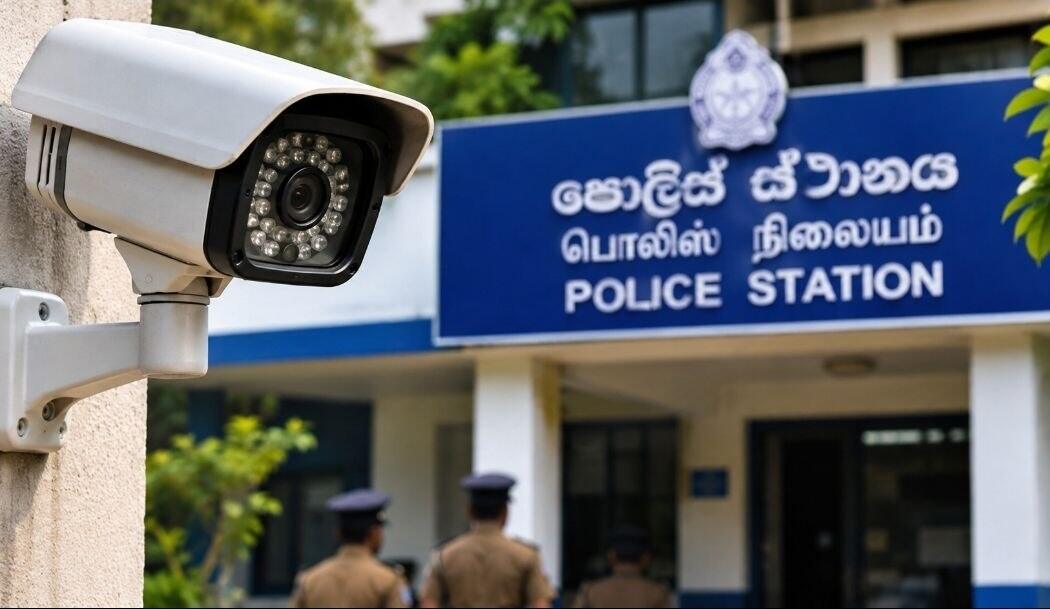
Sri Lanka Police will install CCTV cameras at every police station in the country, with procurement already under way, Police Spokesman ASP F. U. Wootler said.
Wootler said arrangements would also be made to monitor police stations through the footage the cameras record. The aim, according to the announcement, is to strengthen monitoring and oversight of police activities inside stations.
The initiative is expected to improve transparency and accountability within police stations, at a time of public concern over the treatment of suspects held in police custody. The announcement follows renewed public attention to deaths and alleged mistreatment of suspects in custody.
Police have not said when installation will be completed, how many cameras each station will receive or how the monitoring system will work. It is also unclear who will watch the footage and how long recordings will be kept.
Background
Police stations are where most suspects are held after arrest, before they are produced before a magistrate. Article 13 of the Constitution says that no person may be held in custody except in accordance with a procedure established by law, and that an arrested person must be brought before the judge of the nearest competent court as the law provides.
Article 11 of the Constitution states that no person shall be subjected to torture or to cruel, inhuman or degrading treatment or punishment. Sri Lanka also has a Convention against Torture Act, No. 22 of 1994, which makes torture a criminal offence. Allegations of mistreatment in custody are usually examined by the police, the courts and bodies such as the Human Rights Commission of Sri Lanka.
Recordings from fixed cameras can be used as evidence in such inquiries, but only if they are kept securely and can be produced when needed. That depends on how the system is set up, which is the detail police have yet to explain.
What it means
For people who are arrested and their families, cameras inside stations could add a record of what happens to a suspect while in custody. How much protection that offers will depend on where the cameras are placed, whether they run all the time and who is allowed to see the recordings.
For Sri Lankans abroad with relatives who may come into contact with the police, the practical details matter most: whether footage can be requested by a court, a lawyer or a rights body when a complaint is made. The police have not yet given those details. Procurement is the stage that has been confirmed, so the timeline for cameras reaching individual stations remains open.