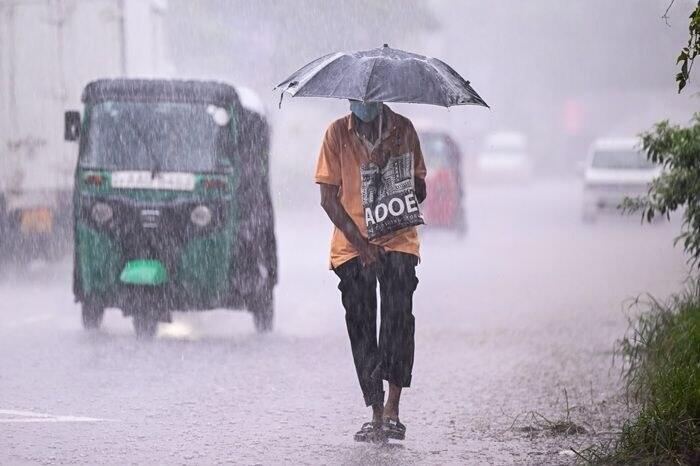
The Department of Meteorology has issued an Amber warning for severe thunderstorms and lightning in 18 districts, effective until 11.30 pm on Thursday (26 November).
The Natural Hazards Early Warning Centre said severe lightning is more likely during thundershowers in the evening or at night. Rainfall of more than 100 mm is likely at some places in the Western, Sabaragamuwa, Central, North-Central, North-Western and Uva provinces.
The warning covers all Divisional Secretariat divisions in Colombo, Gampaha, Kalutara, Kandy, Kegalle, Kurunegala, Matale, Nuwara Eliya, Puttalam and Ratnapura districts. Several areas in Anuradhapura, Badulla, Galle, Mannar, Matara and Polonnaruwa districts are also likely to be affected.
Strong gusty winds of 60 to 70 kmph and temporarily very rough seas can be expected during thundershowers in the sea areas around the island.
The Department listed the possible effects as uprooted trees, damaged houses, localised flash floods, slope failures, power and communication interruptions, and damage to crops and livestock. Road, rail and air transport may also be disrupted.
Background
Thunderstorms are common in Sri Lanka during the inter-monsoon periods, when afternoon and evening showers often develop over the island. The Department of Meteorology and the Natural Hazards Early Warning Centre issue colour-coded warnings so that the public and disaster management officials can judge how serious an expected hazard is. An Amber warning signals that people should take the risk seriously and be prepared to act.
Lightning, flash floods and landslides are among the hazards that cause deaths and damage in Sri Lanka each year. Heavy rain on steep slopes in the Central and Sabaragamuwa provinces, including Nuwara Eliya, Kandy, Kegalle and Ratnapura, can make slopes unstable, which is why slope failures feature in the warning.
What it means
People in the affected districts have been advised to suspend outdoor activities when thunderstorms approach and to shelter inside substantial buildings or enclosed hard-topped vehicles. They should not shelter under trees or in open structures.
The public has also been urged to keep away from open fields, beaches and water bodies, to avoid handling electrical appliances during storms, and to avoid travelling along tree-lined or flooded roads. Residents in vulnerable areas should follow flood and landslide warnings and be ready to move to safer locations if told to do so.
Fishermen and small-boat operators have been advised not to venture out to sea. Those already at sea have been urged to return to shore early.
Commuters and travellers in the affected districts may face delays on roads and railways, and power cuts are possible in places where trees or branches fall on lines. Current updates are available from the Department of Meteorology and the Disaster Management Centre.