
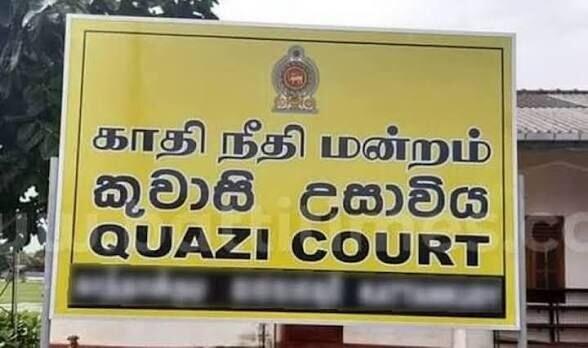
The anti-corruption commission has arrested a Quazi Judge of the Colombo North Quazi Court and a woman over an alleged Rs. 65,000 bribe linked to a divorce case.
The Commission to Investigate Allegations of Bribery or Corruption (CIABOC) named the suspects as Quazi Judge Mohamed Sawahir Mohamed Ramees and Fathima Nasreena. It said the Quazi Judge was arrested inside the office of the Colombo North Quazi Judge.
According to the commission, the bribe was allegedly solicited and accepted in return for a favourable ruling for the complainant. The ruling concerned a divorce case known as Mubara and a compensation case filed by the complainant’s wife under the Muslim Marriage and Divorce Act.
Both suspects were produced before the Colombo Chief Magistrate’s Court, which remanded them until December 1, 2026.
The allegations have not been tested in court, and the suspects are presumed innocent unless proven guilty.
Background
CIABOC is the statutory body responsible for investigating allegations of bribery and corruption in Sri Lanka and for instituting prosecutions in such cases. It regularly carries out arrests after receiving complaints, often catching suspects at the moment a payment is allegedly made.
Quazi courts deal with disputes among Muslims over marriage and divorce under the Muslim Marriage and Divorce Act. Matters before a Quazi can include the dissolution of a marriage and claims linked to it, such as compensation.
A Mubara is a form of divorce in Islamic law in which a couple agree to end the marriage by mutual consent. Disputes over such arrangements can involve questions of financial settlement between husband and wife, which is why a ruling in these cases can carry real consequences for the parties.
Under Sri Lankan law, soliciting or accepting a bribe is an offence for any public servant, and judicial officers are not exempt. Cases brought by the commission are heard in the courts in the usual way, with the burden resting on the prosecution to prove the charge.
What it means
For families who rely on Quazi courts to settle marriage and divorce matters, the case draws attention to the need for rulings that rest on the law and the evidence alone. Anyone who is asked for money in return for a ruling or a service from a public official can report the request to CIABOC, which accepts complaints from the public.
The outcome will depend on the proceedings in court. The remand order means the two suspects will remain in custody until at least December 1, when the case is due to be taken up again by the Colombo Chief Magistrate’s Court.