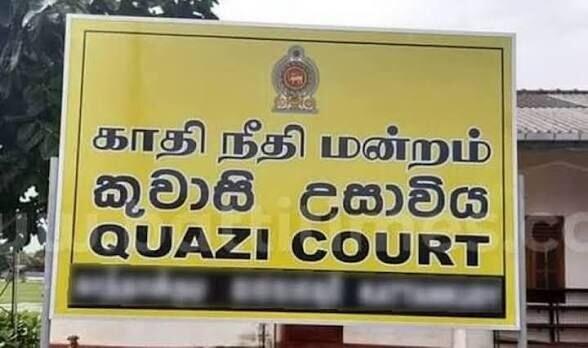

Former State Minister Diana Gamage pleaded guilty on Thursday to a charge of remaining in Sri Lanka without a valid visa, when her case was taken up before the Colombo Magistrate’s Court.
The charge relates to her stay in the country from 17 July 2015 to 16 July 2016. The court has reportedly fixed 17 January for sentencing.
The Criminal Investigation Department (CID) had earlier filed seven charges against Gamage under the Immigrants and Emigrants Act, acting on the instructions of the Attorney General. The charges covered several periods in which she is alleged to have remained in Sri Lanka without a valid visa. They also included providing false information to the Controller General of Immigration and Emigration in order to obtain a Sri Lankan passport.
The reports do not say what happened to the remaining charges after Thursday’s plea. Gamage had pleaded not guilty to all of the charges when the trial began in October 2025.
Background
Gamage entered Parliament as a member of the Samagi Jana Balawegaya and later served as State Minister of Tourism. Her place in public life changed after the Supreme Court ruled on 8 May 2024 that she did not hold valid Sri Lankan citizenship and was therefore disqualified from holding a parliamentary seat.
The reports describe her as a British citizen. After the ruling she lost both her seat in Parliament and her ministerial position. The criminal case under the immigration law followed that decision and was brought by the CID on the Attorney General’s instructions.
The Immigrants and Emigrants Act governs who may enter, stay in and leave Sri Lanka, and requires foreign nationals to hold a valid visa for the whole period of their stay. Making a false statement to the Controller General of Immigration and Emigration to obtain a passport is a separate offence under the same law.
What it means
A guilty plea means the court will move to sentencing without hearing a full trial on the charge to which she pleaded. The sentence will be decided by the magistrate on 17 January, according to the reports.
The case is closely watched because it concerns the rules on citizenship and visas that apply to Sri Lankans who hold a second nationality, and to dual citizens and foreign nationals living in or visiting the country. Anyone in that position can check their current status and the conditions of their visa or citizenship with the Department of Immigration and Emigration.
The court has not yet said what penalty it may impose.