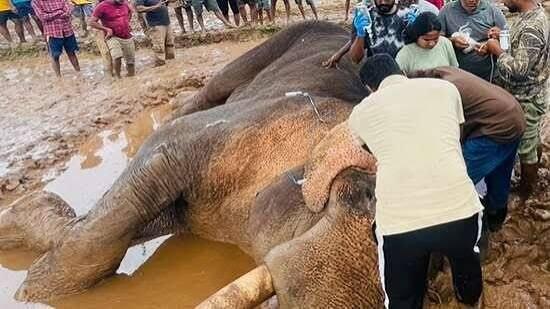
Wildlife Conservation Director General Ranjan Marasinghe has rejected suggestions that his department failed to protect the tusker Kavantissa, who died on 16 October after weeks of treatment for a reported gunshot injury.
Marasinghe said the elephant was estimated to be over 45 years old. “In the wild, elephants generally live for a maximum of 50 to 60 years. In human terms, he was like an 80-year-old person,” he said.
“We have protected this animal for all these years. If someone says this was a complete failure, I cannot accept that,” Marasinghe said, adding that keeping an elephant protected for around 45 years was itself an achievement.
Asked why Sri Lanka had no special protection programmes for prominent tuskers, similar to those for Africa’s so-called super tuskers, he said the threats Kavantissa faced were faced by other elephants as well. The department’s aim, he said, was to protect the whole elephant population.
On GPS tracking collars, Marasinghe said the department had earlier tried to introduce collars for more than 100 elephants but met practical difficulties. Fitting a collar requires the animal to be tranquilised, which carries health risks, particularly for older elephants, he said.
Environmentalists and opposition politicians have called for an independent investigation into who shot the tusker, the treatment he was given and the circumstances of his death. Marasinghe maintained that wildlife authorities had made every possible effort to protect the animal.
Background
Kavantissa received veterinary treatment for several weeks after the gunshot injury to his front leg was reported. He died on 16 October.
A former zoo veterinarian told the Daily Mirror that treating a wild elephant weighing four to five tonnes is difficult and risky and demands specialised skills and careful planning. Wild elephants cannot be handled like captive animals, and any procedure normally begins with sedation, which itself carries risk.
Gunshot injuries are among the threats that elephants face from human activity in Sri Lanka, where villages and farmland often border the habitats of wild elephants. The Department of Wildlife Conservation is the state body responsible for protecting the country’s wild elephants.
What it means
The exchange between the department and its critics centres on how wild elephants are protected, tracked and treated when injured. GPS collars would allow the movements of individual animals to be followed, but the Director General said the sedation they require limits how widely they can be used.
No independent inquiry has been announced in the reports available. Marasinghe said the department’s objective is to protect the wider wild elephant population.