The Human Rights Commission of Sri Lanka has said militarisation of the Northern and Eastern Provinces persists 17 years after the end of the civil war, in a new report on the human rights situation in the two provinces.
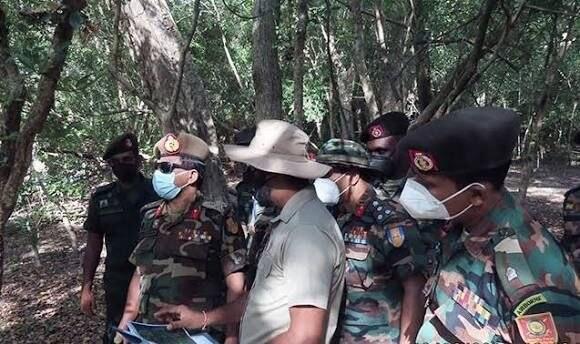
The report, titled “The Human Rights Situation of the Northern and Eastern Provinces of Sri Lanka”, describes a “sustained pattern of land appropriation, denial of access to traditional livelihoods, and intimidation of local populations” by the military in districts across the region.
The Commission said militarisation “remains a persistent feature of governance and land use” in both provinces, despite repeated state assurances to reduce the military footprint and return occupied land to its rightful owners.
It urged the government to speed up the return of military-occupied land and to fully restore property rights and livelihoods. The Commission also said the government should not use national security “as a blanket justification for land acquisition”, particularly where this affects minority communities disproportionately or facilitates religious encroachment. It called on the government to take concrete steps to withdraw the military from civilian economic sectors, especially agriculture and education.
Militarisation is one of several post-war concerns in the report, which also covers enforced disappearances, mass graves, memorialisation, state surveillance and intimidation, land disputes, the resettlement of northern Muslims expelled by the Liberation Tigers of Tamil Eelam (LTTE) in 1990, freedom of religion, development projects and livelihoods.
Ministry of Defence spokesman Brigadier Franklin Joseph told The Hindu that “over 90 %” of the land previously held by the military has been returned. He said owners could not be identified in many cases, or there was no proof of ownership, and that these cases were being examined.
Thurairasa Ravikaran, a Member of Parliament for Mullaitivu from the Ilankai Tamil Arasu Kadchi (ITAK), told The Hindu that large areas remain under military control. He said it was unfair to expect families who fled at the height of the war to produce documents, and that other state agencies, including the Archaeology and Wildlife departments, also hold land in the district.
Background
The civil war between the Sri Lankan state and the LTTE ended in May 2009. During the conflict, large areas in the north and east were taken over for security purposes, and many families were displaced. Some returned after the war and have since asked for the land where their homes once stood, or which they farmed, to be handed back.
The return of land was among the commitments President Anura Kumara Dissanayake made to Tamil voters before the November 2024 general election. His National People’s Power won all but one of the five electoral districts in the north and east.
In August this year President Dissanayake, who is also Minister of Defence, instructed the security forces to speed up the release of land taken over during the war and no longer needed for security purposes. Tamil-speaking residents of the two provinces have said progress has been slow.
What it means
For families in the north and east, the release of military-held land affects where they can live and farm. Residents have said the military presence and its involvement in civilian activity make it harder to rebuild livelihoods after the war.
The Commission’s recommendations are addressed to the government. The report does not itself change land ownership, and the figures on returned land given by the Defence Ministry and the accounts of residents differ.