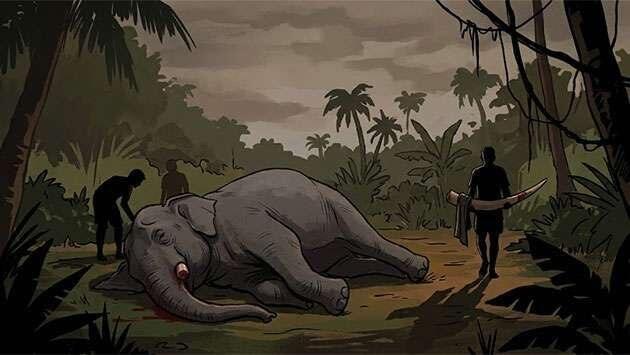
A former Civil Defence Force officer arrested over the suspected removal of a tusk from a dead elephant in Kahatagasdigiliya, Anuradhapura, has been remanded until 19 November.
The Department of Wildlife Conservation (DWC) said the suspect was produced before the Kahatagasdigiliya Magistrate’s Court on 5 November, together with several items seized during the investigation.
Wildlife officers carried out a special search on Wednesday in connection with the tusker found dead in the Kayangollewa area of Kahatagasdigiliya. They recovered a hacksaw suspected of being used to cut off the elephant’s tusk, and plant material believed to have been taken from the place where the animal died. The items were found in a hut on a cultivation plot belonging to the suspect.
A search of the suspect’s home then led officers to an explosive device made from two petrol bottles and elephant firecrackers. A trap gun was also found in the garden.
After the post-mortem examination, wildlife officers took possession of the dead tusker’s right tusk and the remaining part of its left tusk. The DWC said further investigations into the incident are continuing. The cause of the elephant’s death has not been stated in the department’s account.
Background
The case comes as the authorities step up action against illegal hunting. On the same day, the Army and DWC officers carried out a raid in the Kalawewa North area under the Hasthi Sena operation, which aims to protect wild elephants and reduce human-elephant conflict. Officers recovered guns, cartridges, bullets, gunpowder, snares and explosive bait known as Hakka Patas, as well as hare meat and deer antlers.
The DWC has recorded 289 wild elephant deaths in Sri Lanka between 1 January and 23 October 2026, according to its latest statistics. The cause of death was not identified in 95 of those cases.
Wild elephants are protected by law in Sri Lanka. Suspects in such cases are produced before magistrate’s courts, as happened here.
What it means
For farming communities in dry-zone districts such as Anuradhapura, elephants and the devices used against them are a daily concern. Trap guns and explosive baits can injure people as well as animals, which is why the DWC and the Army are searching homes and farmland in joint operations.
Anyone with information about illegal hunting or the trade in elephant parts can report it to the Department of Wildlife Conservation. The suspect remains in custody while the case continues, and the court will take up the matter again on 19 November.