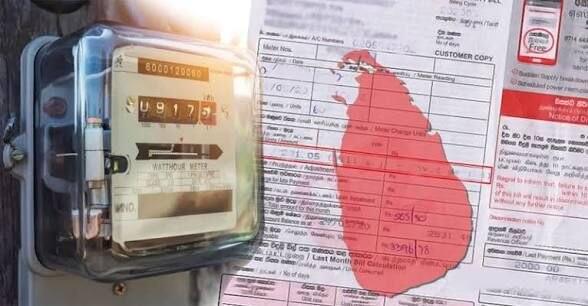
Sri Lanka’s electricity tariff could be cut by 20 percent in the fourth quarter of this year, the Electricity Consumers’ Association said on Sunday.
Association Secretary Sanjeewa Dhammika told a press conference in Marandagahamula, Divulapitiya, that reservoirs were 95 percent to 100 percent full and that solar power was supplying about 27 percent of the country’s electricity requirement.
He said generating a unit of hydropower cost between Rs. 2 and Rs. 4, which made a reduction in tariffs possible.
The association would submit engineering data to the Public Utilities Commission of Sri Lanka (PUCSL) on Monday, Dhammika said. A public consultation on the fourth-quarter tariff is due on 5 November, where the association plans to present data showing that the tariff can be lowered.
Battery storage and the grid
Dhammika also warned that the national grid would need about 450 MW of battery storage capacity by April next year. He said two systems should be developed: one allowing rooftop solar users to store daytime electricity for use at night, and another to strengthen selected points in the grid.
The first, he said, would reduce the country’s dependence on diesel-generated electricity.
Under plans drawn up by the Government and the PUCSL, 160 MW of battery capacity should be added to the grid in December, according to Dhammika. A further 150 MW should follow by April, but a shortfall of about 140 MW would remain, he said.
Tenders have been called for the specialised battery systems but the contracts have not been awarded, and the process is already 14 months behind schedule, Dhammika said. He warned that the cost of compensating for the delay would ultimately fall on electricity consumers.
He called for wider use of net metering and net accounting, which he said would encourage solar power producers without adding to the Government’s burden. He also objected to the practice of reducing solar generation during the day and shutting down small hydropower plants when solar output is high, and said the country should make greater use of low-cost small hydropower and solar-powered battery storage.
Background
The PUCSL is the regulator that approves electricity tariffs in Sri Lanka. Tariff revisions are considered after the utility submits its proposals, and the regulator holds public consultations before it makes a decision.
The figures in this report come from the Electricity Consumers’ Association. The 20 percent reduction is the association’s proposal and has not been approved by the PUCSL.
What it means
If the regulator accepted a cut of the size the association describes, household and business electricity bills would fall for the October to December period. The decision rests with the PUCSL after it hears the evidence presented at the consultation on 5 November.
The association’s warning on battery storage concerns the longer term. Delays in adding storage could affect how much solar power the grid can absorb, and Dhammika said consumers would carry the cost of those delays.
For households with rooftop solar panels, the association’s call for wider net metering and net accounting relates to how they are paid for electricity they feed into the grid.