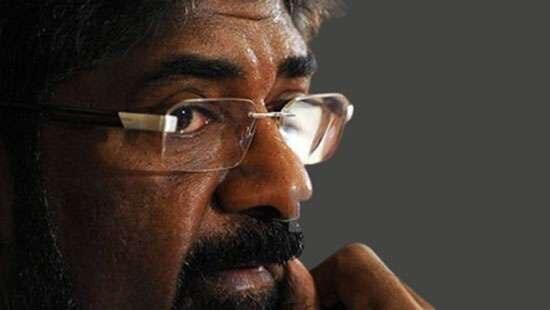
The Supreme Court has imposed travel bans on four former health sector officials, including former Health Minister Keheliya Rambukwella, who have not fully paid the money it ordered them to hand over to the State in a medical procurement case.
The directions followed a contempt of court application filed by Transparency International Sri Lanka (TISL) on 12 October. TISL told the court that the payments ordered in a judgment delivered on 27 March were still outstanding seven months later. The case is SC/FR/65/2023.
That judgment found that five respondents had infringed the right to equal protection of the law guaranteed by Article 12(1) of the Constitution. They were the former Minister, former Health Ministry Secretary S. J. S. Chandraguptha and three other senior officials. The court ordered Rambukwella to pay Rs. 75 million to the State and each of the other four to pay Rs. 50 million, Rs. 275 million in all.
At the hearing on 26 October, Prof. S. D. Jayaratne, a former Chairman of the National Medicines Regulatory Authority (NMRA), told the court that he had paid his Rs. 50 million on 22 October, after TISL filed its application.
The other four respondents gave undertakings on how they would pay:
- Rambukwella paid Rs. 20 million on 23 October and undertook to settle the remaining Rs. 55 million within two weeks.
- Chandraguptha undertook to pay Rs. 5 million within a week and the remaining Rs. 45 million within three months.
- Dr. Vijith Gunasekara, the former Chief Executive Officer of the NMRA, undertook to pay Rs. 20 million within two weeks and the remaining Rs. 30 million within three months.
- Dr. A. Thusitha Sudharshana, the former Director of the Medical Supplies Division, undertook to pay all his savings, about Rs. 2 million, within the week and the remaining Rs. 48 million within three months.
The court directed the four to pay the full amounts due within three months and imposed travel bans on all four. It enlarged them on bail, each on a cash bond of Rs. 50 million with two sureties who must show they can pay that amount. The respondents have one week to meet the bail conditions. The matter will be taken up again on 15 February 2027.
Background
Article 12(1) of the Constitution says all persons are equal before the law and are entitled to the equal protection of the law. Citizens can ask the Supreme Court to enforce it through a fundamental rights petition, and the court can order payments to the State when it finds a violation by public officials.
TISL is the Sri Lankan chapter of the global anti-corruption movement Transparency International. It was the petitioner in the original case and has since returned to the court to press for compliance with the judgment.
In its statement on the hearing, TISL said compliance with court orders is fundamental to the rule of law and constitutional accountability, and should not depend on the petitioner having to start further proceedings. It said civil society groups would keep monitoring such decisions.
What it means
The payments go to the State, so the money recovered goes back into public funds. The travel bans and the cash bonds are meant to make sure the four respondents remain in Sri Lanka and meet their deadlines.
Under the undertakings given in court, the first instalments fall due within one to two weeks, and the balance within three months. The court will review progress when the case is next called in February 2027.