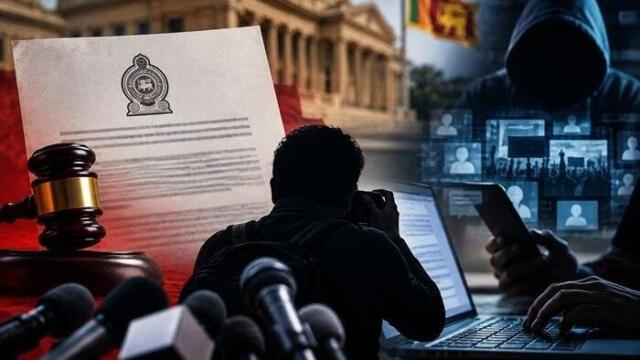
A senior doctor has warned that speaking out about cancer drug shortages and corruption in the health sector could be treated as terrorist activity under proposed legislation, and that professional bodies could risk being labelled terrorist organisations.
Dr. Chamal Sanjeewa, a specialist and Chairman of the Doctors’ Trade Union Alliance for Medical and Civil Rights, made the remarks at a media briefing organised by the National Professional and Civil Front.
He said the newly introduced Organised Crime Prevention Act and the proposed State Terrorism Protection Act contained ambiguities that could give law enforcement authorities wide discretion over what counts as an offence.
According to Dr. Sanjeewa, raising concerns about medicine shortages, substandard drugs, the problems faced by cancer patients, corruption, fraud and irregularities in the health sector could expose medical professionals, trade union leaders and civil society activists to arrest and detention.
He said the Government Medical Officers’ Association (GMOA) and the Inter-University Students’ Federation (IUSF) could also face the risk of being labelled terrorist organisations if the ambiguities were not addressed. The Daily Mirror carried his remarks. The briefing did not include a response from the government.
Background
Dr. Sanjeewa referred to earlier campaigns by doctors’ unions against alleged irregularities in the health sector. He said he and other union leaders had been able to hold public protests against former Health Minister Keheliya Rambukwella and Health Ministry officials.
Had similar legal provisions been in force then, he suggested, those protests might have been treated as terrorist activities, which could have stopped those involved from exposing alleged wrongdoing.
Sri Lanka’s earlier anti-terrorism law, the Prevention of Terrorism Act, has long been criticised by rights groups and professional bodies for its broad definitions and powers of detention. Debate over new security legislation is therefore closely watched by unions and civil society groups.
What it means
Dr. Sanjeewa said the proposed laws could reach beyond political parties and be used to restrict the work of professional associations, civil society groups and religious organisations. He also raised concern that people who post on social media about problems affecting them or their communities could face action.
He pointed out that people, particularly young people, in several countries were protesting against governments over economic difficulties and crises in education and healthcare. Such protests should not automatically be classified as terrorism, he argued.
Describing the possible consequences as a threat to fundamental rights, he urged the public to follow the proposed legislation closely and to consider its implications for freedom of expression, peaceful protest and the work of independent organisations. These are his views; the wording and final scope of the laws will determine how they apply in practice.