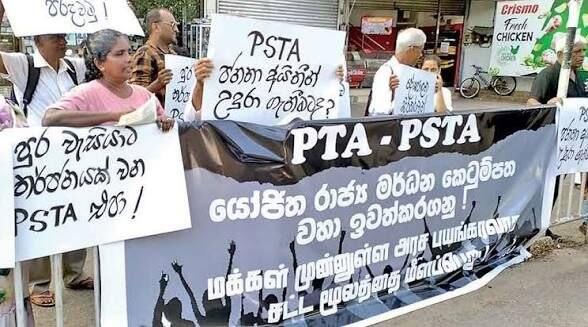
The Feminist Collective for Economic Justice (FCEJ) has said the government’s proposed anti-terrorism and organised crime bills could undermine fundamental rights and restrict public dissent.
In a statement issued on Tuesday, the collective criticised the National People’s Power (NPP) government over the Protection of the State from Terrorism Bill (PSTA) and the Prevention of Organised Crime Bill, which it said were proposed in October 2026.
The FCEJ said the provisions could allow broader policing powers, weaken judicial oversight and potentially criminalise legitimate protest and political opposition. It said that addressing crime and terrorism is a legitimate objective for a government, but described what it called the “criminalization of poverty” and the expansion of broad policing power as extremely concerning.
The collective also criticised the government’s economic policies, including austerity measures, privatisation and the pursuit of foreign investment. It said these had increased financial hardship for ordinary citizens, citing low wages, wage theft, rising household debt and a higher cost of living.
The FCEJ further warned that the proposed legislation on non-governmental organisations (NGOs) and other recently introduced laws could restrict freedom of association, expression and public participation.
It called on the NPP government to reconsider its legislative and economic agenda, accusing it of moving away from its electoral mandate to address exploitation and oppression. The statement did not set out a timetable for the bills.
Background
Sri Lanka’s counter-terrorism law has been the Prevention of Terrorism Act of 1979. Human rights groups and United Nations bodies have criticised the Act for years, and successive governments have promised to repeal or replace it. The FCEJ’s statement refers to the PSTA as the most recent of the proposals.
The NPP formed the government after the 2024 elections. The FCEJ said in its statement that, in its view, the government has continued austerity measures, including the removal of subsidies, and has pursued private foreign investment in mining, solar farms, wind power, palm oil plantations and special economic zones without adequate protections for labour and the environment. These are the collective’s assessments, and the government’s response to them was not included in the statement.
The statement said that economic policies which favour the wealthy have always required strong police powers to counter dissent. It argued that citizens who protest over hardship, workers who strike and environmental activists who resist large projects risk being cast as enemies of the State.
What it means
If passed in their current form, the bills would change the powers available to police and the courts in cases of terrorism and organised crime, according to the FCEJ’s reading of them. The collective said this could affect people who take part in protests, industrial action or campaigns on environmental and labour issues.
Bills in Sri Lanka are normally published in the Gazette before being presented to Parliament, which gives citizens and organisations an opportunity to study the text and make representations. The FCEJ said the proposed NGO legislation could also affect civil society groups, which it said could face limits on association and expression.