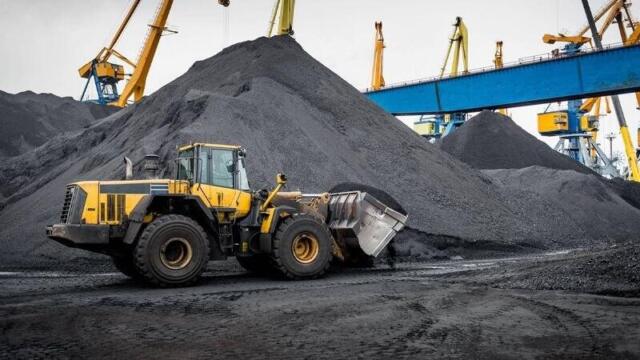
A parliamentary committee report has found that the use of low-quality coal at the Lakvijaya Power Plant in Norochcholai added more than Rs. 15 billion to the cost of power generation, according to a report seen by the Daily Mirror.
The report puts the extra cost of burning more coal than the plant’s standard rate at over Rs. 7 billion. Maintenance and related costs linked to the coal came to Rs. 80.4 million, and the report also counts the cost of buying electricity from outside to cover the generation shortfall. Plant authorities confirmed the Rs. 7 billion figure to the committee.
The Lakvijaya plant’s standard coal consumption is 0.3742 kg per unit of electricity generated. The committee treated any consumption above that level as an additional cost, using criteria based on usage between 2018 and 2025. It studied coal use from 1 January to 15 September 2026.
The coal in question was supplied under a tender agreement between Lanka Coal Company and Trident Chemphar Ltd for 1.5 million tonnes between December 2025 and May 2026. Twenty-five shipments were scheduled, but only 19 arrived, amid concerns about quality. Another five shipments were obtained through emergency procurement.
Background
The report was prepared by a committee appointed by the parliamentary Sectoral Oversight Committee on Infrastructure and Strategic Development. At a meeting on 5 August 2026, that panel recommended a separate committee chaired by Chandana Wijesingha, Additional Secretary (Power and Electricity Sector Reforms) at the Ministry of Energy.
That committee was asked to examine delays in the shipments, the failure to generate the specified megawatts from the coal, the amount of electricity bought from outside, and the losses from emergency procurement. Its report was due before 30 September 2026. Professor Saliya Jayasekara, chairman of Electricity Generation Lanka (Private) Limited, had been nominated to help, but later asked to withdraw. On 10 September, Wijesingha told the oversight committee that the work could continue without him.
The maintenance costs include dismantling, cleaning and reinstalling boiler air preheater elements, clearing accumulated ash from the boiler, and Rs. 1.3 million for repairs to the coal mill.
What it means
The findings come as the country faces power interruptions. The National System Operator (Pvt.) Ltd. said the Norochcholai plant is expected to resume generation by Thursday. Its chairman, B. L. Pradeep Priyadarshan Perera, told the Daily Mirror that the shutdown caused a shortfall of 250 megawatts, which led to the scheduling of power cuts. Furnace oil is being used for additional generation in the meantime.
The Ceylon Electricity Board has announced a rotational schedule for the evening peak today (21 October). Group 3 is due to lose power between 4.30 p.m. and 5.00 p.m., Group 4 between 5.30 p.m. and 6.00 p.m., Group 1 between 6.30 p.m. and 7.00 p.m., and Group 2 between 7.30 p.m. and 8.00 p.m. The Board said cuts would be made only if necessary, depending on demand, available generation and weather, and that actual times may vary by up to 30 minutes.
Extra generation costs of this kind are borne by the electricity system, and can feed into debates over future tariffs. The report itself does not say how the costs will be recovered.