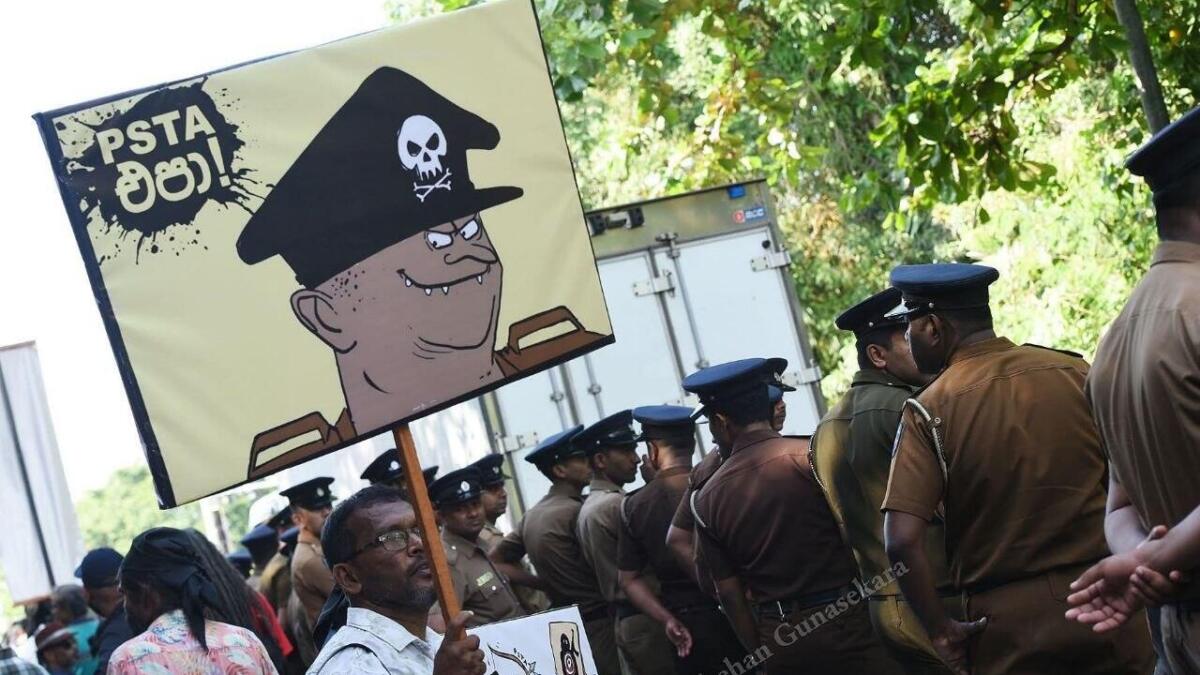
The Sri Lanka Freedom Party (SLFP) opposes the proposed Protection of the State from Terrorism Act (PSTA) in its present form, former Parliamentarian Udith Lokubandara said in a statement on Thursday.
Lokubandara, the SLFP’s Foreign Affairs Coordinator and Wanni District Leader, urged the government to reconsider the Bill. He said national security legislation must not weaken democratic freedoms and constitutional rights.
He said the party’s position should not be read as opposition to counterterrorism laws. It is, he said, a call for stronger legal safeguards, because of concerns over fundamental rights and the possible misuse of state powers.
Lokubandara said the PSTA is meant to replace the Prevention of Terrorism Act (PTA) of 1979. In his view, it must address the shortcomings of the existing law and not repeat them under a different name.
He listed four areas of concern: the definition of terrorism, the powers of arrest and detention, executive authority, and whether judges would supervise the process adequately. He said the law must clearly separate genuine terrorist activity from peaceful protest, trade union action, political expression and legitimate dissent.
He called for meaningful consultation with legal professionals, constitutional experts, human rights institutions and communities affected by earlier counterterrorism measures before the Bill moves forward.
“Sri Lanka does not have to choose between national security and democratic freedom,” he said.
Background
The PTA has been in force since 1979 and has remained on the statute book under successive governments. Lokubandara acknowledged that this included administrations led by the SLFP.
He argued that past security challenges should not stop political leaders from recognising shortcomings in the current law and strengthening protections against abuse. Drawing on his experience as a former MP, Monitoring MP for the Ministry of Defence and Urban Development, and Chief of Staff to former President Mahinda Rajapaksa, he said accountability must accompany state power whichever party is in office.
He also warned that the proposed law could have implications for Sri Lanka’s international commitments, including obligations linked to the European Union’s GSP+ trade preferences.
What it means
The definition of terrorism and the rules on arrest and detention decide who can be held, for how long, and under whose supervision. The debate over the PSTA therefore bears on how the law would treat protesters, trade unionists and others who take part in public dissent.
GSP+ gives eligible Sri Lankan exports duty-free or reduced-duty access to the European Union market, so the way the Bill is drafted could matter to exporters and the workers they employ. Lokubandara asked the government and Parliament to examine the contested provisions carefully before the Bill is advanced.