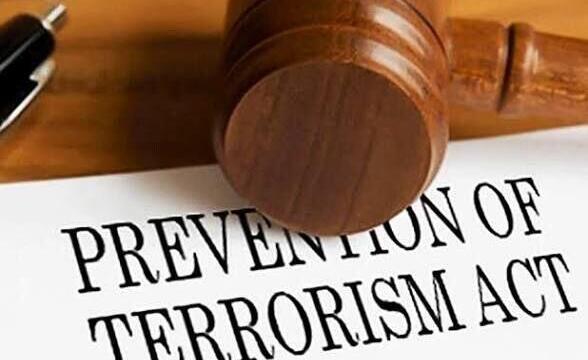
Opposition Leader Sajith Premadasa has said Sri Lanka could lose its GSP+ trade preferences with the European Union if the government goes ahead with what he called oppressive counter-terrorism laws.
In a special statement, Premadasa accused President Anura Kumara Dissanayake’s administration of trying to bring in harsh legislation to silence public dissent and to divert attention from unfulfilled election pledges.
He said the EU has asked Sri Lanka to scrap the current Prevention of Terrorism Act (PTA) in order to strengthen human rights and democratic safeguards, not to replace it with a more restrictive law. Enacting such measures, he said, could endanger the GSP+ scheme, which gives Sri Lankan exports preferential entry into European markets.
Premadasa alleged that the draft law could erode civil, political and human rights and give the government wider discretion over who may be labelled a terrorist. He said the government was using national security as a pretext to expand executive power.
The Opposition Leader also accused the administration of breaking its promises to lower fuel and electricity costs, ease poverty and support small and medium enterprises, farmers, fishermen and workers.
He called on the government to drop any legislation that threatens democratic freedoms and to pursue constitutional reforms that strengthen fundamental rights. The government, he said, had been given a mandate to safeguard the sovereignty and rights of the people, not to entrench the ruling party’s hold on power.
Background
Premadasa’s statement comes as two bills are before the public and Parliament. The Protection of the State from Terrorism Bill was submitted on 6 October, and the Prevention of Organised Crimes Bill was submitted to Parliament on 20 October. The Human Rights Commission of Sri Lanka and the Bar Association of Sri Lanka have objected to several provisions in the draft laws.
Human Rights Watch said in a statement this week that the organised crime bill reproduces abusive provisions of existing counterterrorism laws. It said the bill would allow detention orders of two months at a time for up to a year, and would make confessions to the police admissible in court. Human Rights Watch called on the government to withdraw it.
The PTA dates from 1979 and has long been criticised by rights groups for allowing prolonged detention. Governments in Sri Lanka have repeatedly pledged to repeal it. Human Rights Watch noted that the National People’s Power alliance promised in its 2024 election manifesto to abolish all “oppressive” laws.
GSP+ is the European Union’s trade arrangement for vulnerable developing countries. It removes import duties on many products, on condition that the beneficiary country implements international conventions on human rights, labour standards, the environment and good governance. Human Rights Watch said repealing the PTA is a key commitment Sri Lanka made to the EU under the scheme.
What it means
The GSP+ scheme affects Sri Lankan exporters who sell to European markets, and the workers employed in those industries. Premadasa’s warning is that any loss of the preferences would raise the cost of Sri Lankan goods in Europe.
The bills have not yet been passed, and the government’s response to Premadasa’s statement was not part of the material available. The EU assesses compliance with GSP+ conditions through its own monitoring process.