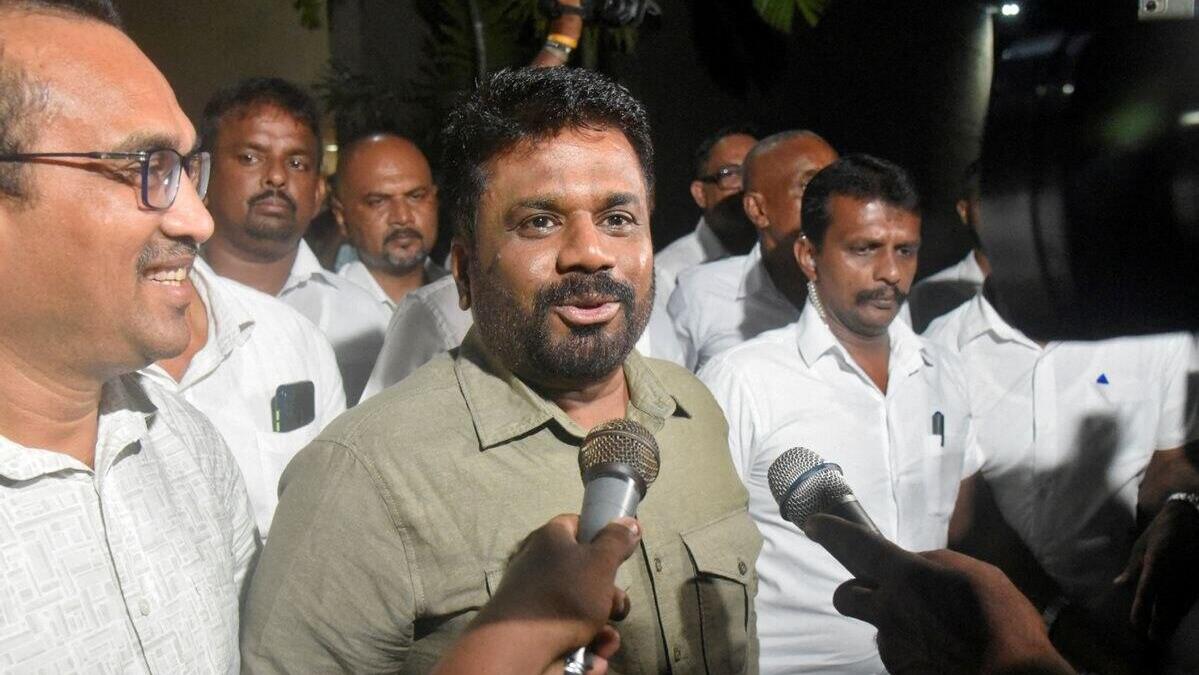
President Anura Kumara Dissanayake has told ministries that development funds not spent under set conditions will return to the General Treasury.
He spoke at a meeting of the Ministerial Consultative Committee on Finance, Planning and Economic Development, held in Parliament on 23 November. The President called for district development projects to be speeded up and for public money to be managed efficiently.
He said ministries and institutions must plan their development projects from the start of the financial year and review progress every month. Unspent allocations revert to the Treasury unless conditions such as opened Letters of Credit are met, he said, and funds that do not meet those conditions must be sought again through the following year’s budget.
The President also stressed the need to track district-level progress using the project report book issued to district development committees.
The committee also discussed the fertiliser subsidy for farmers and the management of the Maha harvest. It looked at clearing existing paddy stocks in warehouses before the next Maha harvest, by turning them into rice for welfare programmes or directing them to other uses such as animal feed.
On investment, President Dissanayake said tax concessions alone are not enough and called for faster allocation of land to investors. Securing land currently takes about 18 months, which hinders investment, the meeting heard. Members discussed identifying state lands and placing them under the Board of Investment or a special land bank, with a fast-track allocation mechanism based on the scale of the investment, the jobs it creates and its effect on the national economy.
Cryptocurrency regulation, digitalisation in the insurance and transaction sectors and VAT issues affecting cooperative societies were also taken up.
Minister of Labour and Deputy Minister of Finance and Planning Dr Anil Jayantha and Deputy Minister of Economic Development Nishantha Jayaweera attended, along with Members of Parliament and officials of the Ministry of Finance, Planning and Economic Development.
Background
Under Sri Lanka’s public finance system, Parliament approves money for each ministry in the annual Appropriation Act, and ministries spend it during the financial year, which runs from January to December. Money that is not used by the end of the year generally cannot be carried forward automatically, which is why the President urged early planning and monthly reviews.
A Letter of Credit is a bank guarantee used in imports and contracts. The President cited opened Letters of Credit as one condition under which an unspent allocation may be kept, according to the account of the meeting.
Ministerial Consultative Committees are made up of Members of Parliament and are attached to individual ministries. They meet to review ministry work and policy with officials.
What it means
For readers outside Colombo, the emphasis on district development committees and project report books points to how local road, water and community projects are monitored. Projects that miss spending conditions risk losing their funds until the following year’s budget, which could delay work in districts.
Farmers may be affected by the discussion of the fertiliser subsidy and the clearing of paddy stocks before the next Maha harvest. Investors and Sri Lankans abroad who are considering projects at home may be affected by the proposals to speed up land allocation, although no decision on a land bank or fast-track mechanism was announced.