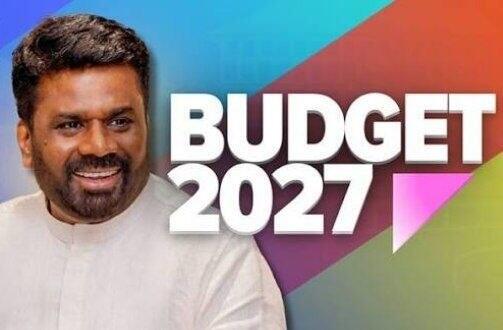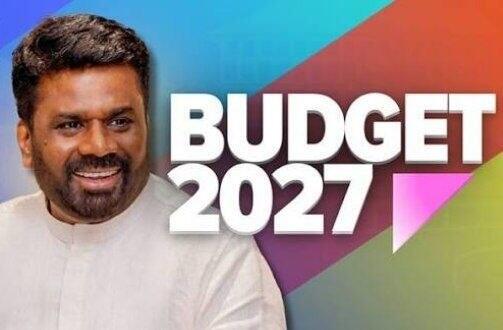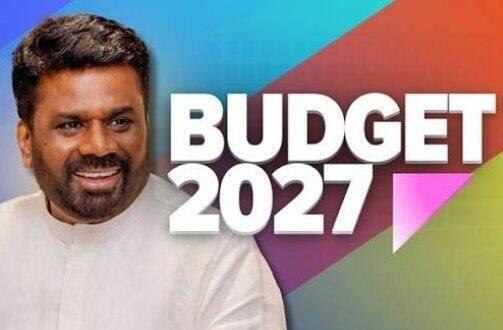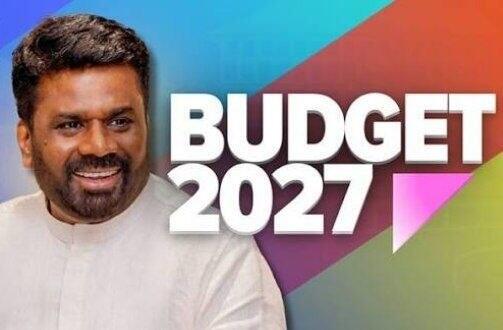
President Anura Kumara Dissanayake presented the 2027 Budget in Parliament on Thursday, saying the government’s aim is to manage current economic pressures while laying the foundation for the next generation.
Dissanayake, who also serves as Finance Minister, delivered the second reading of the Appropriation Bill for the 2027 financial year after Prime Minister Harini Amarasuriya presented the Bill to Parliament. The Cabinet approved the Budget earlier in the day as a procedural step.
The government has said the Budget includes Rs. 2 trillion in capital allocations aimed at economic expansion and development. The President said it is designed to strengthen the country’s production economy.
He said economic stability had been achieved during one of the most challenging periods, citing the Middle East conflict and its effect on global oil and fuel prices. “We have still not been able to overcome these pressures,” he said.
The President said the government spent more than Rs. 147 billion on relief for the public across several sectors. According to the figures he cited, Sri Lanka spent $4,042 million on fuel imports in 2025. By September 2026, spending on fuel imports had reached $4,487 million, which is already more than the whole of the previous year.
On SriLankan Airlines, Dissanayake said the national carrier has suffered losses totalling Rs. 528 billion since former President Mahinda Rajapaksa cancelled its partnership with Emirates in 2008, allegedly over a personal issue. He said the Cabinet has appointed a special committee to look at options to reduce the airline’s debt, and asked all members of Parliament to support the effort.
The President also thanked migrant workers, saying the country expects foreign remittances to exceed $9 billion.
Background
The Budget is presented as the Appropriation Bill, which sets out how much the government may spend in the coming year across ministries and projects. After the second reading, the Bill is normally debated in Parliament over several weeks and goes through a committee stage before the final vote.
Sri Lanka is in the period after its 2022 debt crisis and is still working through an economic recovery programme. Fuel is among the country’s largest import costs, so changes in global oil prices feed quickly into the import bill, the exchange rate and the cost of transport and electricity.
Remittances from Sri Lankans working abroad are one of the main sources of foreign currency, alongside tourism and exports. The President’s figure of more than $9 billion is a government expectation, not a final outturn.
What it means
For households, the details of tax changes, relief payments and public sector spending will become clear as the full Budget proposals are examined in the coming days. The capital allocation of Rs. 2 trillion points to government spending on infrastructure and development projects, which can affect jobs and contracts in the construction sector.
For Sri Lankans working overseas, the government’s reliance on remittances shows how much the economy depends on money sent home. Using official banking channels to send money is what counts towards the national total the government cites.
The airline debt committee could affect travellers and taxpayers, since losses at state-owned enterprises are ultimately covered by the public purse, though the Cabinet has not yet said what options it is considering.