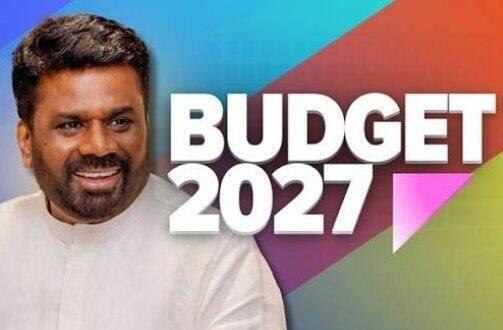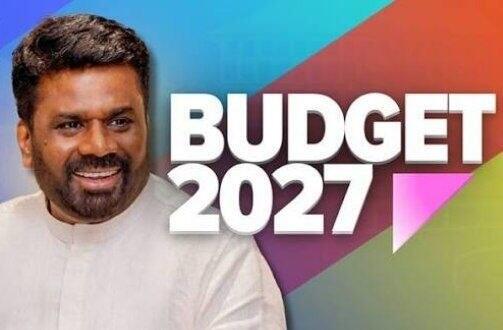
The government has proposed raising the annual tax-free income threshold for individuals from Rs. 1.8 million to Rs. 1.95 million in the 2027 Budget, which President Anura Kumara Dissanayake presented to Parliament on Thursday.
The change lifts the monthly tax-free level for salary earners from Rs. 150,000 to Rs. 162,500. People earning up to that amount a month in salary and allowances would pay no personal income tax on it, according to the Budget Speech.
The President, who also holds the finance portfolio, proposed a revised rate structure as well. The first Rs. 850,000 of annual taxable income would be taxed at 6 percent, followed by 12 percent on the next Rs. 600,000. The existing 18 percent rate at that level would be replaced.
The next three bands, each covering Rs. 600,000 of income, would be taxed at 18 percent, 24 percent and 30 percent. Income above those bands would be taxed at the top rate of 36 percent.
The monthly income at which the highest rate applies would rise from about Rs. 358,000 to Rs. 433,000. The Budget Speech said the changes would give individual taxpayers additional monthly relief of between Rs. 750 and Rs. 15,750, depending on their income. The amendments to the Inland Revenue Act, No. 24 of 2017, would take effect on 1 April 2027, according to Lanka Business Online.
Background
The President said the annual tax-free threshold was raised from Rs. 1.2 million to Rs. 1.8 million in 2025. That earlier change gave monthly relief of between Rs. 3,500 and Rs. 20,500.
Taken together with the 2025 reforms, the proposed 2027 changes would bring total monthly tax relief to between Rs. 4,250 and Rs. 36,250, the Budget Speech said.
Personal income tax in Sri Lanka is governed by the Inland Revenue Act, No. 24 of 2017. Salary earners are generally taxed through the Pay-As-You-Earn (PAYE) system, under which employers deduct the tax from monthly pay and pass it to the Inland Revenue Department.
Budget proposals are announcements of government policy. Tax changes need to be written into law by amending legislation approved by Parliament before they apply.
What it means
For salaried workers, the proposals would mean a lower monthly PAYE deduction once the changes take effect, with the size of the saving depending on pay. Those at the lower end of the taxable range would gain about Rs. 750 a month, and those on higher salaries up to Rs. 15,750, according to the Budget Speech.
Employees who earn Rs. 162,500 or less a month in salary and allowances would not pay income tax on that pay. Sri Lankans working abroad who earn income overseas should check with the Inland Revenue Department how any Sri Lankan income is treated under the new bands.
Employers and payroll departments would need to update deduction tables once Parliament approves the amendments and the Department issues guidance.