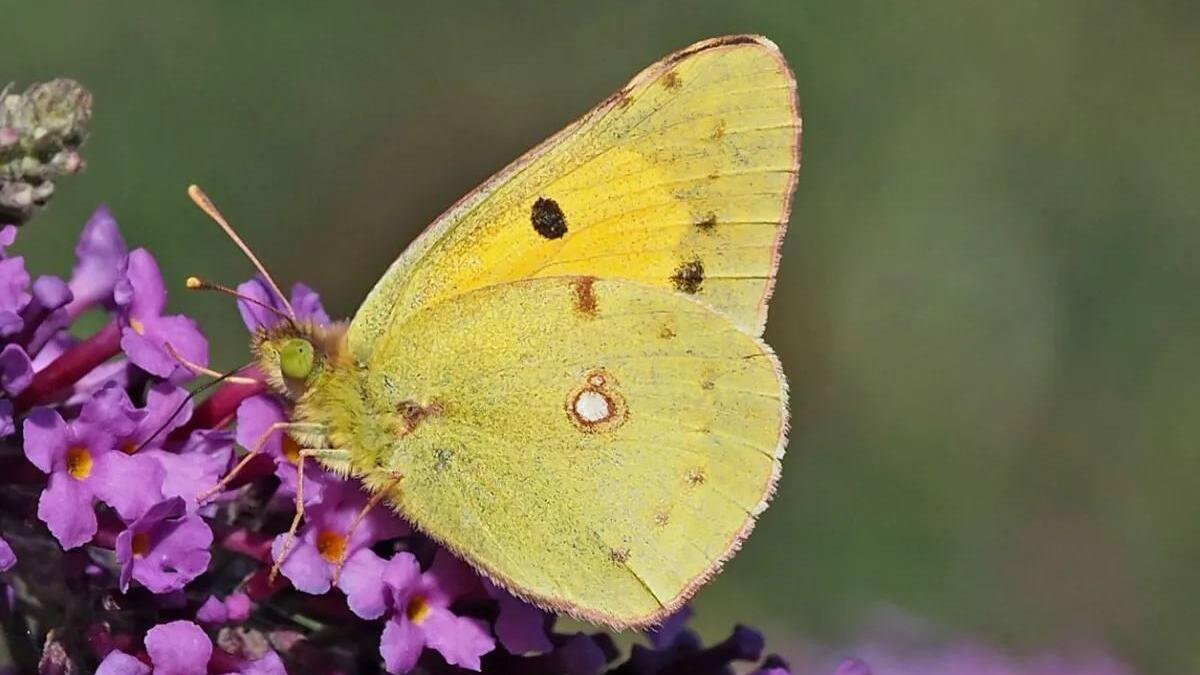
Thousands of yellow and white butterflies seen flying across Colombo, Galle, Ratnapura and other parts of Sri Lanka are part of a seasonal migration and not a sign of an approaching disaster, experts say.
Videos and photographs circulating on social media show butterflies moving in large groups, often in the same direction. The sight has drawn public attention and raised questions about what is behind it.
An explanation published by Fact Crescendo Sri Lanka said the movement is linked to monsoon rainfall, changes in vegetation and breeding patterns. Among the species involved are the Lemon Emigrant, Mottled Emigrant, Lesser Albatross and Common Albatross.
Experts said migrations in Sri Lanka usually take place in two periods. The main one runs from October to December, and a smaller movement follows between March and April.
A former president of the Butterfly Conservation Society of Sri Lanka told Fact Crescendo that seasonal rain encourages host plants to grow, particularly in the dry zone, creating good conditions for breeding. The larger population then spreads across the country, influenced by wind and the availability of suitable plants. She said she had personally seen Lemon Emigrant and Mottled Emigrant butterflies moving from east to west in the Borella area of Colombo.
Background
A 2024 study in the scientific journal Taprobanica, involving researchers including Professor Kapila Dissanayake of Sabaragamuwa University, identified the main butterfly migration routes across Sri Lanka. It collected information from 60 locations and found that one major route runs from the southeast towards the northwest.
The researchers observed movement from the Kumana National Park area towards Wilpattu, a distance of about 280 kilometres covered in three to four days. The average flight speed of migrating Albatross butterflies was estimated at about 11 kilometres an hour.
Many Sri Lankans believe butterflies travel towards Sri Pada, also known as Butterfly Mountain. Experts said some butterflies show a behaviour called hill-topping, in which they gather around elevated places to find mates. Research indicates, however, that many migrating butterflies travel northwest and not specifically towards Sri Pada.
What it means
The mass sightings have led to speculation that the movement could signal a coming cyclone or another natural disaster. Experts said there is no established scientific evidence that mass butterfly migration predicts a major disaster.
They said butterflies are sensitive to atmospheric pressure, humidity, temperature and wind, but their movements cannot be treated as an official warning. Weather warnings for the public come from the Department of Meteorology.
Experts also said climate change, irregular rainfall and the spread of invasive plant species are growing threats to butterflies. Despite the large numbers now visible, research suggests butterfly populations and major migrations have declined compared with historical levels.