Sri Lanka has signed a USD 100 million loan agreement with the Asian Development Bank (ADB) to modernise technical and vocational education and training (TVET), the Ministry of Finance said on Friday.
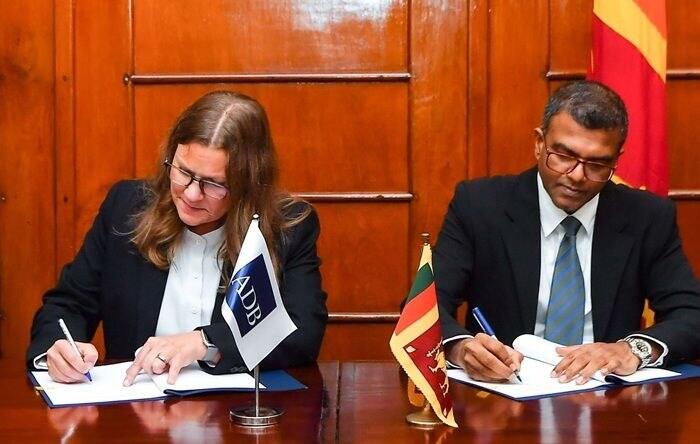
The agreement was signed at the General Treasury in Colombo. Harshana Suriyapperuma, Secretary to the Ministry of Finance, Planning and Economic Development, signed for the government, and Shannon Cowlin, ADB Sri Lanka Country Director, signed for the bank.
The money will be provided under a results-based financing arrangement, the Ministry said. The Skills Development System Transformation Program aims to strengthen skills development at secondary education level, expand employment-oriented training and increase the involvement of industry and the private sector in vocational training. It is scheduled to run from 2027 to 2031.
Under the programme, the existing Automobile Engineering Training Institute will be upgraded into a Centre of Excellence for Automobile Technology. Nine TVET centres will become regional training hubs, and facilities at another 40 training centres will be improved to widen access.
The Ministry said 200 National Competency Standards, along with curricula and learning materials, will be updated to match labour market needs. New courses will be introduced in priority industries and occupations, and workplace-based training standards and professional development for TVET instructors will be strengthened.
The programme will also support policy, financing and digital reforms, including financing schemes to encourage private training providers to expand. Digital measures include an e-learning platform and a unified Training Management Information System linked to labour market and school management information systems. Students at secondary level will also get career guidance on vocational training and job options.
Background
Results-based financing differs from a conventional project loan. Disbursements are tied to the achievement of agreed targets rather than to the money spent on inputs, so funds are released as the programme meets the results set out in the agreement.
TVET covers practical courses that prepare people for skilled trades and technical jobs, such as automobile servicing, construction and hospitality. Training is delivered through state institutions and private providers, and National Competency Standards describe what a trainee must be able to do to be certified in a given occupation.
The ADB is one of Sri Lanka’s major development partners and has funded projects in sectors including transport, energy, water and education. Loans from multilateral lenders such as the ADB are repaid by the government over a fixed period, and the terms are set out in each agreement.
What it means
For students and job seekers, the changes would mean updated course content and, at the upgraded and new regional centres, wider access to training in their area. Because the programme is due to start in 2027, the benefits will not reach classrooms immediately.
Many Sri Lankans seeking work abroad rely on recognised trade qualifications, and the updating of national competency standards is aimed at keeping training in line with what employers require. The Ministry did not give further details of the loan terms in its statement.