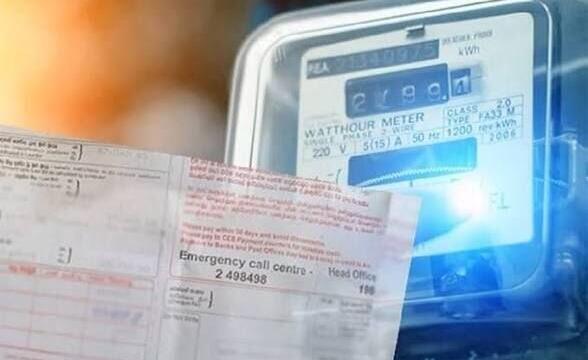
The National System Operator (NSO) has decided not to seek an electricity tariff increase for the October to December quarter, the Public Utilities Commission of Sri Lanka (PUCSL) was told at a stakeholder consultation on Thursday.
The position is a reversal. The NSO had originally asked for a 2.88 percent increase for the final quarter of 2026. It cited improved reservoir storage and expectations of above-normal rainfall for dropping the request.
PUCSL Director of Communications Jayanath Herath said the Commission expects to announce its final decision within six days of the consultation. The regulator, not the NSO, determines tariffs.
Power and Energy Minister Anura Karunathilaka had earlier said the government would “under no circumstances” pass on to consumers the losses or related costs of the recent nationwide power outage. He had also said the relevant institutions had informed the PUCSL that no increase was required for the quarter.
The PUCSL had already trimmed the NSO’s request to a preliminary 1.46 percent. Its consultation document put the total cost of supply for the fourth quarter at Rs. 157.3 billion, against projected revenue of about Rs. 154 billion. The original submission identified a shortfall of around Rs. 4.4 billion.
Background
Electricity tariffs in Sri Lanka are reviewed by the PUCSL, which examines the projected costs and revenue of the power sector before approving any change. In its review the Commission adjusted several expenditure claims, including generation capacity costs, extra spending linked to the use of substandard coal during the second quarter, and costs submitted by Electricity Distribution Lanka.
The Commission also questioned the inclusion of Rs. 1.1 billion in loan repayments under the Supporting Electricity Supply Reliability Improvement Project. It said capital expenditure should be recovered through tariffs only after the relevant assets are completed and capitalised.
The fourth-quarter demand forecast is 4,796 million units. Major hydropower is expected to supply 32.34 percent of generation, coal 25.68 percent and other renewable sources 28.81 percent. More hydropower can reduce reliance on thermal plants, including those that run on costly liquid fuel.
The improved water outlook does not remove every cost pressure. Coal and fuel prices, the availability of generating units, capacity payments and the share of renewable energy will continue to shape the cost of supply.
What it means
For households and businesses, the immediate question is whether the PUCSL accepts the NSO’s new position and keeps current tariffs unchanged for the rest of the year. If it does, the preliminary 1.46 percent adjustment would be dropped and bills would stay at present levels for the quarter.
The final determination is due within six days of the consultation. Until the PUCSL announces it, the 1.46 percent figure remains the Commission’s preliminary assessment.