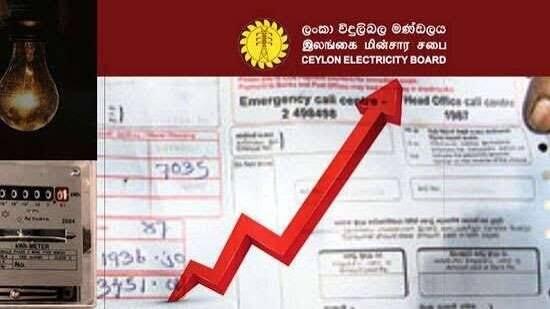
The Public Utilities Commission of Sri Lanka (PUCSL) has proposed a 1.46 percent electricity tariff adjustment for October to December 2026, although NSO Pvt Ltd told a public consultation on Thursday that it would not request any increase for the period.
The consultation was held at the Bandaranaike Memorial International Conference Hall (BMICH) in Colombo on 5 November, before the regulator makes its final determination. The proposed increase is not yet final.
The PUCSL first estimated that the revenue requirement implied a 2.88 percent increase. It lowered the figure to 1.46 percent after reviewing submissions from the National System Operator (NSO) and Electricity Distribution Lanka (EDL).
According to the Commission’s preliminary assessment, the forecast cost of supplying electricity for the quarter is Rs. 157.3 billion, against projected revenue of Rs. 154 billion. The assessment also counts a revenue deficit of Rs. 1.1 billion carried forward from the previous quarter.
The PUCSL removed an increase in generation capacity costs attributed to Electricity Generation Lanka (EGL), and revised extra spending claimed over the use of substandard coal in the second quarter. It also excluded Rs. 1.1 billion in loan repayments requested by EDL under the Supporting Electricity Supply Reliability Improvement Project. The Commission said spending on work in progress should be recovered through tariffs only after the assets are completed and capitalised.
Background
The NSO has forecast demand of 4,796 million units for the quarter. Major hydropower is expected to supply 32.34 percent of generation, coal 25.68 percent and other renewable sources 28.81 percent.
Generation costs are expected to vary during the quarter. Lower hydropower and renewable output is projected to push December generation costs about 34 percent above those of October and November, according to information reported on the consultation proposal.
The PUCSL has also raised questions about fuel pricing. It pointed to the absence of a Fuel Supply Agreement for EGL and to the lack of transparent pricing provisions in agreements covering the West Coast and Sobadhanavi power plants.
Battery storage is also part of the calculations. The NSO has included Rs. 703 million in capacity costs for battery storage systems, as it expects 160 MW of battery capacity to be connected in phases.
What it means
Household and business customers will see the effect only if the PUCSL confirms an increase in its final decision. The consultation was meant to let stakeholders examine the assumptions behind the proposal, including fuel prices, generation costs, capacity payments, renewable energy forecasts and battery storage spending.
The PUCSL invited representations in Sinhala, Tamil and English. The NSO’s statement that it will not seek an increase leaves the final figure to the regulator’s determination.