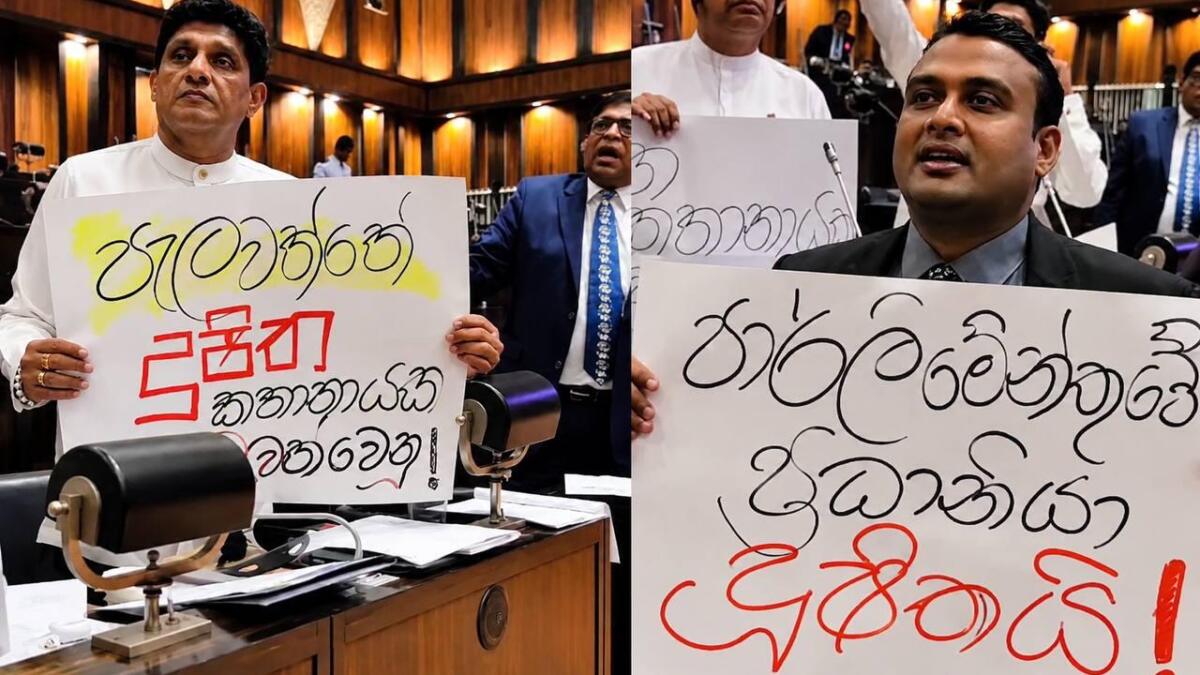
Opposition MPs protested in Parliament on Tuesday after Deputy Speaker Rizvie Salih declined to let several privilege issues, including a no-confidence motion against Speaker Jagath Wickramaratne, be raised immediately.
Mr Salih said he had received copies of the privilege issues submitted by several MPs after 9.00 a.m. He said he could not allow them to be raised at once because he had not yet examined them.
Opposition Leader Sajith Premadasa said the Opposition had handed the Secretary-General of Parliament a no-confidence motion containing 50 charges against the Speaker on 9 October. He said it was signed by 44 Opposition MPs.
Mr Premadasa said the motion was entered in Parliament’s Order Book on 12 October but was later rejected on a decision of the Committee on Parliamentary Business. He said this denied the Opposition a chance to debate the allegations.
He said the decision violated parliamentary privileges and democratic principles, and that it raised concerns about the Speaker’s impartiality and the independence of Parliament. He called for an investigation into whether refusing to debate the motion amounted to a breach of privilege.
Mr Premadasa also said restrictions were being placed on freedom of speech, expression and debate in the House. He said the Speaker is constitutionally bound to act impartially and to give government and Opposition MPs a fair opportunity to exercise their parliamentary rights.
Several Opposition MPs kept objecting to the Deputy Speaker’s decision, which led to a tense exchange in the chamber. Mr Salih told the House that the privilege issues would be examined and that a response would be given during the day.
Opposition MPs continued to protest. The government went ahead with the scheduled business of the House.
Background
A privilege issue is a complaint by an MP that the rights of Members or of Parliament as a whole have been breached. Such matters are normally raised with the Chair at the start of a sitting, and the Speaker or the presiding officer decides whether and when they are taken up.
The Committee on Parliamentary Business is the body that arranges the business of the House, including which motions are placed on the agenda and when they are debated. An item that appears in the Order Book is not guaranteed a debate, because the committee can decide how the agenda is arranged.
The Speaker presides over debates and is expected to apply the Standing Orders of Parliament fairly to all sides. When a motion concerns the Speaker personally, the Deputy Speaker or another presiding officer generally takes the Chair, which is why Mr Salih was handling the Opposition’s request on Tuesday.
What it means
The dispute is about whether the Opposition can force a debate on the conduct of the Speaker. The outcome depends on the response the Deputy Speaker has promised and on any further decision of the Committee on Parliamentary Business.
Parliamentary sittings are open to the public and are recorded in Hansard, the official report of debates. Readers can follow the response to the Opposition’s request there once it is published.