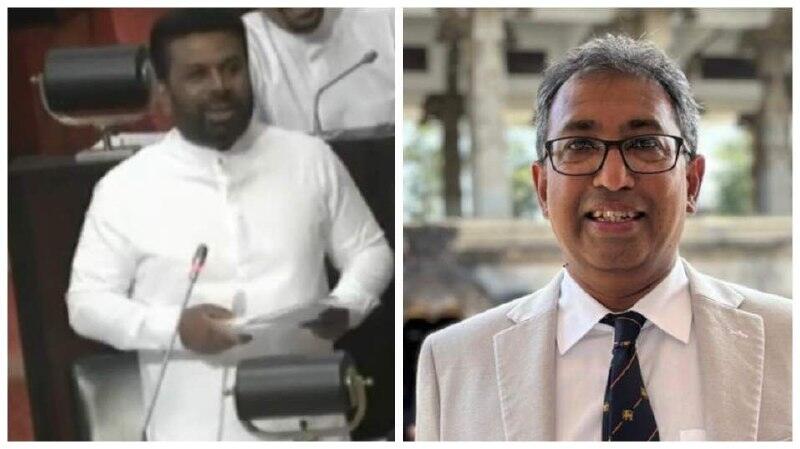
Samagi Jana Balawegaya (SJB) MP Harsha de Silva has accused the Government of raising several taxes over the past year, contradicting President Anura Kumara Dissanayake’s recent statement that no taxes had been increased.
De Silva said taxes had been imposed on software exports and digital services, and that taxes on electric vehicles had been doubled. “As Chairman of the Committee on Public Finance, I know exactly how many taxes this administration has increased over the past year. They have even introduced entirely new taxes,” he said.
He also questioned the information being given to the President on the Government’s tax policy.
De Silva said the Government now had room to cut taxes because revenue had exceeded expectations, mainly through taxes collected on vehicle imports. He said Government revenue had risen to more than Rs. 5 trillion.
He also questioned the Government’s claim of a primary account surplus, saying it was partly the result of money allocated for development projects not being spent. Around Rs. 1.5 trillion had been allocated for capital expenditure this year, he said, but only Rs. 300 billion had been spent by June. Even if spending had since reached Rs. 600 billion, a large part of the allocation remained unused, he said.
He cited the Prabhashara project in Dambulla and delays in installing a solar power system as examples, saying funds had been allocated but the work had dragged on for months. “Taxes are collected not simply to keep money in the Treasury. They are collected to be spent on development and public services,” he said.
Background
The primary account balance is the Government’s revenue minus its spending, leaving out interest payments on debt. A surplus means the Government is collecting more than it spends on running the country, before paying interest. It is one of the main measures used to judge Sri Lanka’s progress under its International Monetary Fund (IMF) programme.
Capital expenditure is the money the Government spends on roads, buildings, power projects and other lasting assets, as opposed to salaries, pensions and interest. Parliament approves the yearly allocation in the Budget, but ministries and agencies must still carry out the work and draw the money from the Treasury.
The Committee on Public Finance is a parliamentary committee that examines the Government’s revenue, spending and borrowing. De Silva said in his remarks that he chairs it.
What it means
According to de Silva, the taxes he listed affect software exporters and providers of digital services, as well as buyers of electric vehicles. He argued that higher-than-expected revenue means the Government could reduce taxes.
His comments set out the opposition’s position in the public argument over whether the Government has raised taxes. The Government’s position, as stated by the President, is that it has not.