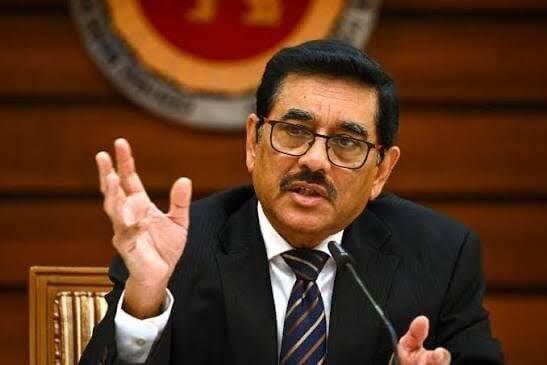
Central Bank of Sri Lanka (CBSL) Governor Dr Nandalal Weerasinghe has said policies the country needs must be carried out whether or not the public favours them.
Speaking at a lecture at the University of Kelaniya, he said that avoiding necessary economic policies because they are unpopular could cause serious harm to the country in the long run.
He said the Central Bank is now a more independent institution and must apply whatever monetary and regulatory policies are needed to protect long-term economic stability. “In the past, we managed to sustain things in certain ways. The Central Bank has implemented strict policies and will continue to do so,” he said.
On taxation, Dr Weerasinghe said tax rates sometimes have to rise according to the country’s needs, even when most people oppose the increases. He acknowledged that such decisions can lead to protests and some social instability. He said the Government has a responsibility to explain the economic effects of raising or lowering taxes.
He said the public should be kept informed of policy decisions through effective communication. “Before implementing a policy, we think about it and make a significant effort to communicate it to the public through our various communication channels,” he said. He added that public understanding is essential for policies to work and to deliver the intended results.
On the Central Bank’s independence, he said it would apply whatever measures suit the economic conditions of the time. “Whatever policy is needed for the country, whether it involves reducing or increasing interest rates, allowing the exchange rate to fluctuate or taking any other measure suited to the current economic conditions, will undoubtedly be implemented,” he said.
Background
The Central Bank of Sri Lanka is the country’s monetary authority. It sets the policy interest rates, manages the exchange rate regime and supervises banks. Its governor is appointed by the President on the recommendation of the Constitutional Council.
Sri Lanka’s Parliament passed a new Central Bank law in 2023 that gave the bank greater operational independence and set price stability as its primary objective. The change came as the country was working through its economic crisis and the programme agreed with the International Monetary Fund (IMF), which had asked for stronger central bank independence.
The Governor’s remarks on taxation touch on a policy area that belongs to the Government rather than the Central Bank. Tax rates are set by the Government and approved through legislation, while the Central Bank sets interest rates and manages the exchange rate.
What it means
For households and businesses, the Governor’s comments signal that the Central Bank does not intend to hold back on interest rate or exchange rate decisions because of public opinion. Borrowers and savers are affected by rate changes through loan and deposit rates, while the exchange rate affects the price of imported goods and the value of money sent home by Sri Lankans abroad.
The remarks also indicate that tax rises, where the Government decides they are needed, may be accompanied by efforts to explain them. The Governor did not announce any specific change in interest rates, taxes or the exchange rate in the lecture.