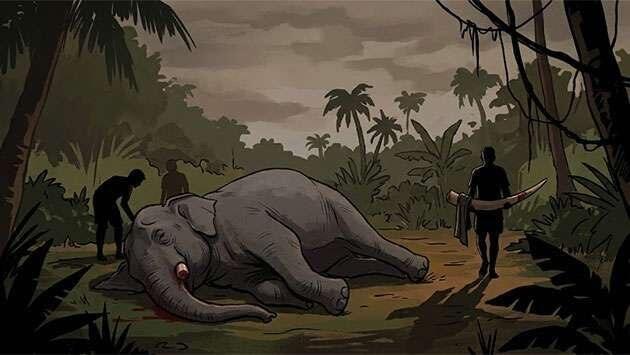
An elephant has reportedly been shot dead in a forest reserve in the Kahatagasdigiliya area of Anuradhapura, with one of its tusks believed to have been removed.
The killing is believed to have taken place about two days before it was reported on Sunday. Residents in the area suspect the animal was the tusker known as ‘Lankeswara’, but its identity has not been officially confirmed.
The elephant is reportedly not among the 13 elephants the government has identified for special protection. Authorities have not yet confirmed the identity of the dead animal or the circumstances of its death.
Opposition Leader Sajith Premadasa referred to what he called another tusker killing in a social media post that carried images of a dead elephant. ‘One more tusker killed. A horrific sight, as reported by the Wildlife Department,’ he said, citing information reportedly provided by the Department of Wildlife Conservation.
Premadasa urged the authorities to act without delay to prevent further killings. He called for those responsible, whom he described as ‘environmental terrorists’, to be brought before the law and given the toughest possible punishment. The location and circumstances of the death he referred to have not been independently confirmed, and it is not clear whether his post concerns the same animal.
Premadasa has previously called for a dedicated conservation programme and a special investigation into the death of the tusker Kawanthissa, which prompted wider concern over the killing of wild tuskers.
Background
Anuradhapura District in the North Central Province is home to several forest reserves where wild elephants move between forest, scrub and farmland. Kahatagasdigiliya is one of the Divisional Secretariat areas in the district.
Wild elephants are protected in Sri Lanka under the Fauna and Flora Protection Ordinance, which provides severe penalties for killing one. The Department of Wildlife Conservation is the agency responsible for enforcing the law and for investigating such deaths.
Tuskers are comparatively rare because only a minority of male Sri Lankan elephants carry tusks. Tusks are sometimes targeted by poachers, while elephants are also killed by gunshots, snares, electric fences and other devices set up by people trying to protect crops and homes.
The government has said it has identified 13 elephants for special protection. The reported killing of an animal outside that group has raised questions among residents and conservationists about the safety of the country’s remaining tuskers and about how well the protective measures are working, according to the report.
What it means
If the death is confirmed as a shooting, it would be treated as a criminal offence. The Department of Wildlife Conservation would be expected to investigate, and any arrests would depend on evidence gathered at the scene.
Villagers who live close to forest reserves are usually the first to find carcasses. Wildlife officers generally ask them to report such finds to the nearest wildlife office or police station and to avoid disturbing the area, so that evidence is preserved for investigators.