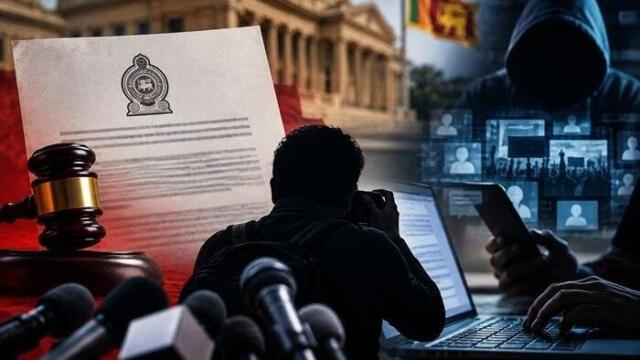
The United Nations Human Rights Office (OHCHR) has warned that Sri Lanka’s proposed Protection of the State from Terrorism (PSTA) Bill could allow arbitrary detention, restrict freedom of expression and raise the risk of torture.
In a 19-page assessment dated 13 October, the office reviewed the Bill gazetted on 22 September 2026. It said the draft contains improvements on earlier versions but still reproduces or expands weaknesses in the existing Prevention of Terrorism Act (PTA).
The office called on the Government to carry out a comprehensive review before the Bill is enacted, with meaningful consultation of civil society, independent institutions and legal experts.
Its main concern is a provision allowing the Secretary to the Ministry of Defence to authorise detention for up to two months at a time, to a maximum of one year. Extensions beyond the first two months need High Court approval, but the initial decision stays with the executive rather than a court, the office said.
The assessment also noted that suspects could be produced before a Magistrate up to 48 hours after arrest by police, or up to 72 hours after arrest by the armed forces. It recommended that every suspect be brought before a Magistrate as soon as possible, ordinarily within 24 hours, whoever made the arrest.
Background
The Bill would repeal and replace the PTA. The UN and rights groups have long criticised that law for allowing prolonged detention without trial.
The OHCHR welcomed several changes in the latest draft. These include the removal of police confessions as admissible evidence, extra protections for journalism and civil society activity, and audio-visual recording of police interviews. The Bill also requires the Human Rights Commission of Sri Lanka to be told of arrests and detentions within 48 hours.
The office said these changes were not enough to address the wider human rights risks. It also warned that transitional provisions could let pending PTA cases and some existing regulations continue after the current law is repealed.
It said broadly defined terrorism offences, including those on confidential information and terrorist publications, could be used against journalists, human rights defenders and peaceful protesters. It called for explicit protection of journalistic sources and public-interest reporting.
The Bill lets members of the armed forces and the Coast Guard exercise certain arrest and search powers. The office warned this could add risks of arbitrary detention, torture and enforced disappearance, and urged that civilian police keep primary responsibility for law enforcement. It also questioned the President’s power to proscribe organisations and the powers to restrict movement, public gatherings and communications, and asked for stronger judicial oversight and clear time limits.
The office said it remained ready to give technical assistance on counter-terrorism legislation that protects national security while respecting rights.
What it means
Opposition Leader Sajith Premadasa said on Thursday that the European Union has called for the PTA to be repealed, and warned that the proposed laws could cost Sri Lanka its GSP+ trade concession. His warning is a political assessment, not a decision by the European Union.
The Ceylon Chamber of Commerce said it has submitted its observations on the Bill. It urged that the legislation provide clear definitions, judicial oversight and due process safeguards, and be aligned with Sri Lanka’s international commitments to help preserve GSP+ access. The concession gives Sri Lankan exports preferential access to European markets and supports jobs and export earnings, the chamber said.
The Human Rights Commission of Sri Lanka and the Bar Association of Sri Lanka have also raised objections to provisions in the proposed legislation.