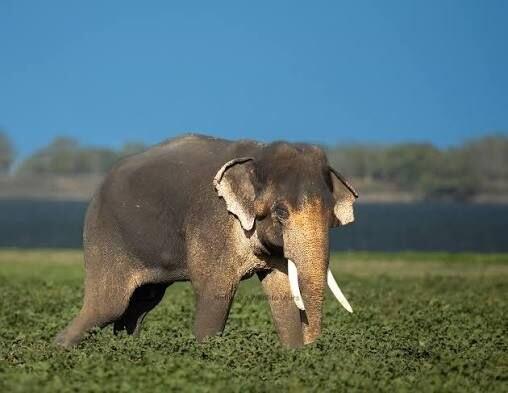
Veterinary teams are continuing treatment of a wild elephant that fell ill and collapsed at Sammanthurai in Ampara, with wildlife officials working around the clock to save the animal, the Ministry of Environment said.
The male elephant is estimated to be between 25 and 30 years old. The Ministry said it is receiving intensive treatment under a joint operation involving wildlife officials, veterinary teams, the Army and Police.
According to the Ministry, the elephant appeared well built and in generally good physical condition, but had an unusually swollen abdomen. There were no visible external injuries.
Veterinarians initially suspect the condition may have been caused by poisoning, or by a gastrointestinal blockage after the animal ate indigestible material such as polythene.
The treatment is being coordinated by the Eastern Regional Wildlife Veterinary Unit, the Ampara Wildlife Range Office and the Sammanthurai Beat Office. Essential antibiotics were administered on Thursday, 22 October, and officials are monitoring the elephant’s condition closely.
Heavy rain in the area has flooded the site where the elephant collapsed, which has hampered treatment. Authorities are preparing the ground with sand so that treatment can continue.
The Army has deployed 10 personnel to assist the Department of Wildlife Conservation, and Police are also supporting the operation. The Ministry said wildlife officers are staying at the site around the clock to monitor the elephant, keep it safe and give medication when needed.
Background
Sammanthurai is in the Ampara District of the Eastern Province, an area where wild elephants and farming communities share land. Wild elephants are protected by law in Sri Lanka, and the Department of Wildlife Conservation is the agency responsible for their care and for managing conflict between people and elephants.
Veterinary teams in Sri Lanka have in the past treated elephants that became ill after feeding at open rubbish dumps, where polythene and other waste can be swallowed along with food. A blockage of this kind can be difficult to treat in a large wild animal, because the animal must be sedated and handled with care in the field.
Poisoning is the other cause veterinarians have named in this case. The Ministry described both explanations as initial suspicions, and it has not announced a confirmed cause.
The reported rain is a further difficulty. Wet ground makes it harder to bring vehicles, equipment and medical supplies close to a collapsed animal, which is why the authorities have chosen to build up the ground with sand.
What it means
For residents of Sammanthurai and nearby villages, the operation means increased Army, Police and wildlife staff activity around the site while treatment continues. The Ministry has not announced any restriction on movement in the area.
More broadly, the case points to a risk that wildlife officials have warned about before: waste left in the open can be eaten by elephants and other animals. Disposing of polythene and food waste in sealed bins is a measure that conservation authorities commonly recommend to communities living near elephant habitats.