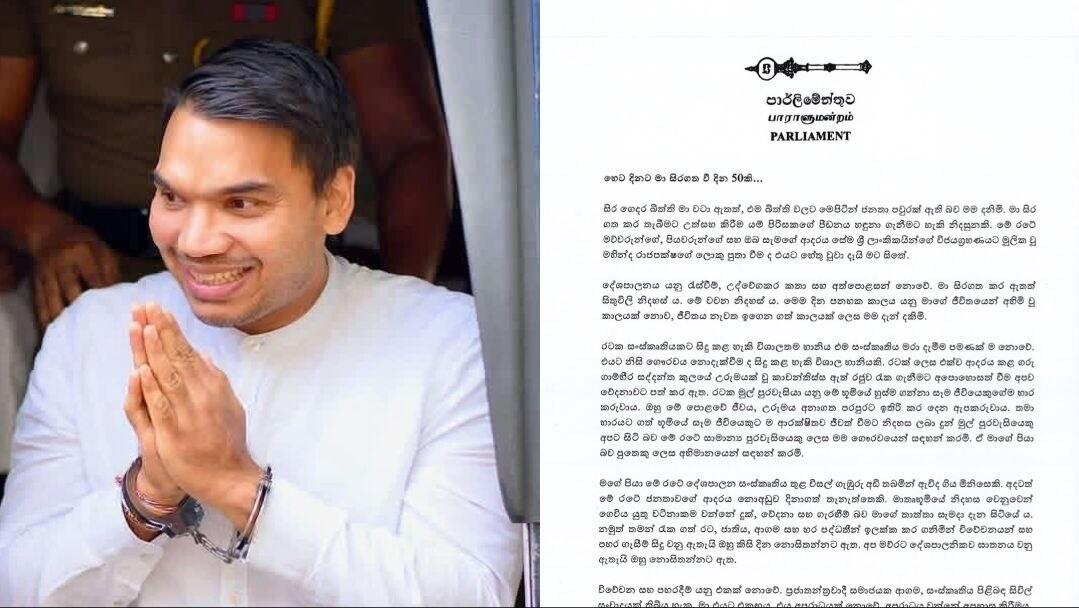
Sri Lanka Podujana Peramuna (SLPP) MP Namal Rajapaksa has said he is prepared to stay in custody for 500 days if it eases the economic burden on the public and protects the country’s cultural heritage.
In a statement dated 23 October, Rajapaksa said 24 October marked 50 days since he was taken into custody. “If my country can benefit and our cultural heritage can be protected, then I am willing to remain imprisoned for not just 50 days, but even 500 days,” he said.
He questioned the government’s economic record, saying people continued to face severe financial difficulty despite official statements that the country’s financial position was improving. He referred to several promises and proposals, including cutting electricity bills by two-thirds, lowering fuel prices, raising salaries every six months, interest-free loans without collateral, making Toyota Vitz cars available for around Rs. 1.2 million, and removing taxes on essential goods, healthcare and education.
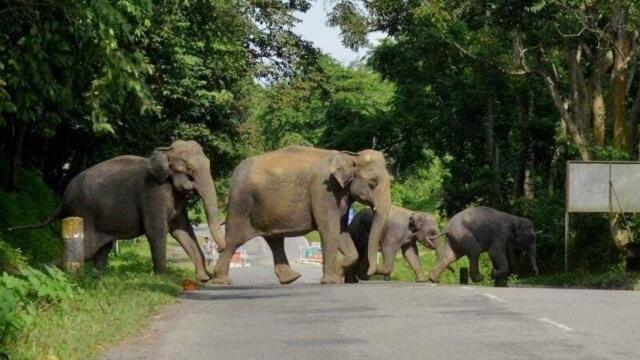
Rajapaksa also criticised what he described as attempts to divert attention from national problems by targeting one political family. He referred to the death of the tusker Kavantissa and said he was saddened by the country’s failure to protect the animal. He stressed the importance of safeguarding Sri Lanka’s cultural and natural heritage.
On religion and culture, he said democratic societies should allow civil discussion but warned against insults, distortion of facts and the spread of hatred. He also praised his father, former President Mahinda Rajapaksa.
Rajapaksa said he was confident the judiciary would eventually acquit him of the allegations against him. He said his imprisonment had given him an opportunity to reflect on life and politics and had not restricted his thoughts or political convictions. “Although you may imprison me, you cannot imprison the aspirations of the people who stand with our camp,” he said.
Background
Namal Rajapaksa is a Member of Parliament for the SLPP and the son of Mahinda Rajapaksa, who served as President from 2005 to 2015 and later as Prime Minister. The SLPP was formed in 2016 and is closely associated with the Rajapaksa family. The reports of the statement did not set out the allegations against him, and the claims made in it are his own. The government’s response was not included in the reports.
The economic measures he listed are matters on which policy is set by several bodies. Electricity tariffs are reviewed by the Public Utilities Commission of Sri Lanka (PUCSL) on applications from the Ceylon Electricity Board, and retail fuel prices are revised under a pricing formula applied by the Ceylon Petroleum Corporation and other fuel suppliers. Taxes are set through legislation and tax orders.
What it means
The statement is a political one, made while Rajapaksa is in custody, and the economic claims in it are his assessment rather than findings by an independent body. Readers looking for the current position on electricity charges, fuel prices or taxes can check the notices issued by the PUCSL, the Ceylon Petroleum Corporation and the Inland Revenue Department.
The allegations against Rajapaksa are a matter for the courts, and he has said he expects to be acquitted. Until a court rules, he has not been found guilty of any offence.