
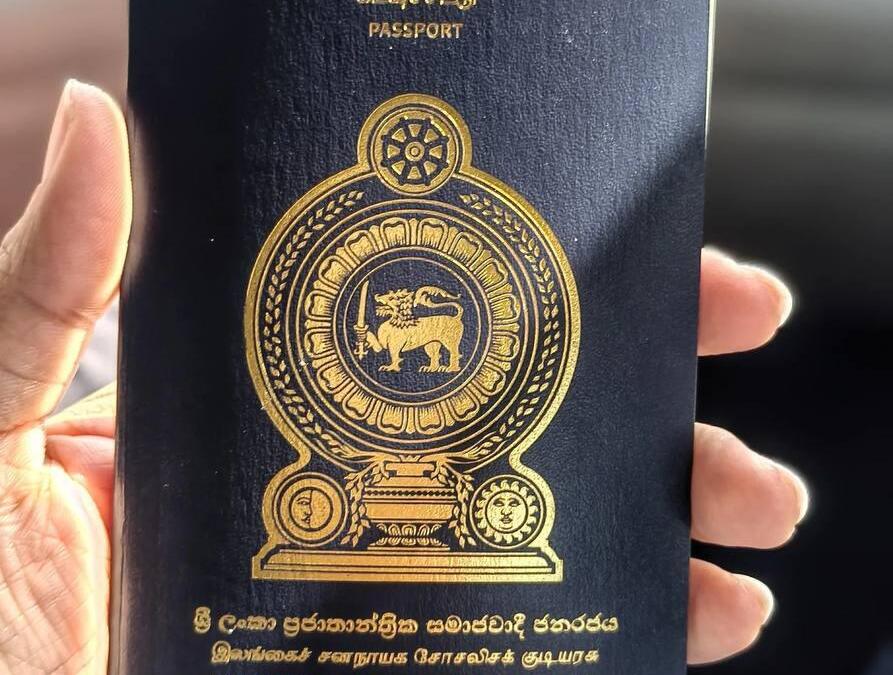
Last updated: 19 October 2026
This guide is for Sri Lankan citizens living, studying or working overseas whose passport is close to expiry, full, damaged, lost or stolen. It explains the general route for renewing or replacing a passport from abroad and where to confirm the current requirements.
Who this applies to
The process applies to Sri Lankan citizens who are outside Sri Lanka and hold, or have held, a Sri Lankan passport. It also covers people whose passport has been lost or stolen, and people whose passport has no blank pages left. Citizens who also hold another nationality should check how the foreign authorities treat their travel documents, and should read the Colombo Tribune guide on dual citizenship where relevant.
Applications from abroad are normally handled by the Sri Lankan diplomatic mission that serves the country where the applicant lives: an embassy, a high commission or a consulate. Each mission publishes its own instructions, opening hours and appointment rules, and these can differ from one country to another.
What you need
Requirements are set by the Department of Immigration and Emigration and applied by each mission. The exact list changes from time to time, so confirm it on the official website before you travel to the mission or send anything by post. In general terms, applicants should expect to need the following:
- The completed application form for a passport, downloaded from the official source named below.
- The current passport, if you still have it, or a police report or similar statement if it was lost or stolen.
- Proof of Sri Lankan citizenship, such as a National Identity Card (NIC) or a birth certificate.
- Photographs that meet the published specification.
- Proof of your residence status in the country where you live.
- Payment of the fee, in the form and currency the mission accepts.
The fee and the exact list of documents are not given here because they change. Check the current fee and form on the official websites named at the end of this guide.
Step by step
- Find the Sri Lankan mission that covers your place of residence, using the Ministry of Foreign Affairs website.
- Read the passport services page of that mission, or of the Department of Immigration and Emigration, to see whether you must book an appointment and whether any part of the process is online.
- Collect the documents listed for your case: a routine renewal, a replacement for a lost passport, or a first passport for a child.
- Submit the application as the mission directs, in person or by an approved alternative. Biometric details such as fingerprints and a photograph may be taken at the mission.
- Pay the fee in the way the mission describes and keep the receipt.
- Wait for the mission to confirm that your application has been accepted, and ask how you will be told when the passport is ready.
- Collect the new passport or receive it by the delivery method the mission offers, and check that every detail is correct before leaving.
Costs and timing
Fees depend on the type of passport, the type of application and, in some cases, the country. Processing time also varies, and it is longer when an application needs extra checks, for example after a loss or when documents are incomplete. No fee or processing time is stated here. Applicants should read the current schedule on the official website and keep the receipt.
Because replacement can take time, it is sensible to apply well before the passport expires. Many countries require a passport to be valid for a minimum period beyond the planned date of travel, and some visa and residence applications need a valid passport. Check the rules of the country you intend to enter.
Common problems
- Missing documents. An incomplete application is usually returned or delayed. Use the checklist on the mission’s website.
- Lost or stolen passports. Report the loss to the local police if the mission asks for it, and tell the mission as soon as possible.
- Name or date of birth differences. If details differ between your birth certificate, NIC and passport, ask the mission what supporting documents it accepts before applying.
- Urgent travel. If you need to travel before a new passport can be issued, ask the mission whether any emergency travel document is available in your case.
- Unofficial agents. Use only the mission or the official channels it names, and be cautious about anyone who asks for payment outside the published process.
Where to get help
Contact the Sri Lankan embassy, high commission or consulate that serves your area. In Sri Lanka, the Department of Immigration and Emigration is responsible for passports. The Ministry of Foreign Affairs lists the missions abroad and their contact details. Keep copies of everything you submit and of every receipt.
Official sources
- Department of Immigration and Emigration, Sri Lanka: www.immigration.gov.lk
- Ministry of Foreign Affairs, Sri Lanka: www.mfa.gov.lk
- The website of the Sri Lankan embassy, high commission or consulate that serves your country of residence, as listed by the Ministry of Foreign Affairs.