
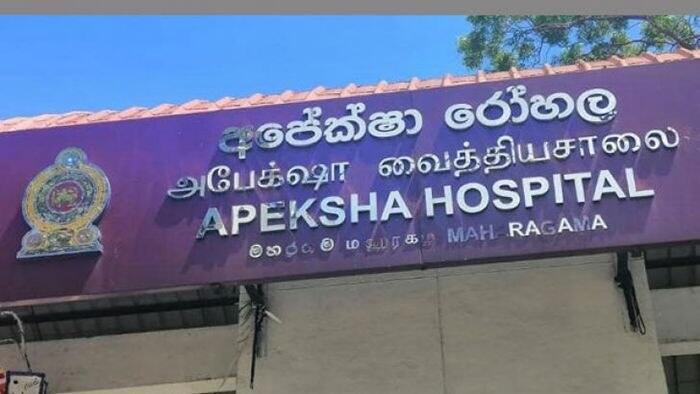
A medical specialist has asked President Anura Kumara Dissanayake to order an immediate investigation into an alleged plan to buy a 17-year-old linear accelerator for the Apeksha Cancer Hospital in Maharagama.
Dr. Chamal Sanjeewa, President of the Medical Professionals’ Alliance for Medical and Civil Rights, said the machine is used to deliver radiation treatment to cancer patients. He alleged that a modern model is available but that efforts were being made to procure the older one, with the involvement of a biomedical engineering company.
The purchase is planned under a programme funded by the Asian Development Bank (ADB) to improve cancer treatment facilities in Sri Lanka, according to Dr. Sanjeewa.
He said the proposed purchase raised the question of whether the decision was being influenced by personal interests linked to the supplier. He asked the President to direct an independent investigation into the procurement process.
Dr. Sanjeewa also called for a review of how a recently acquired CT simulation machine at the hospital was procured and installed, and said the role of the same company should be examined. He alleged that technical teams at the hospital were resisting the introduction of modern equipment, which he said was delaying installation.
He urged the authorities to find out whether administrative or technical decisions were holding back the adoption of advanced medical technology. He warned that procurement decisions shaped by personal relationships rather than patients’ needs could have serious consequences for cancer treatment.
The allegations have not been independently verified. The authorities and the company concerned have not been quoted in the statement on the claims.
Background
The Apeksha Hospital in Maharagama is the main state hospital for cancer care in Sri Lanka, and Dr. Sanjeewa said thousands of patients depend on it. Radiotherapy is one of the standard treatments for cancer, and linear accelerators are the machines that direct beams of radiation at a tumour.
A CT simulation machine is a scanner used to plan radiotherapy. It produces the images clinicians use to decide where and how radiation should be aimed, so it is part of the same treatment chain as the accelerator.
Equipment bought with loans or grants from development lenders such as the ADB is normally bought through a tendering process that follows the lender’s procurement rules, as well as national procurement guidelines. The allegations made by Dr. Sanjeewa concern how that process is being applied in this case.
What it means
Radiotherapy machines are expensive and are expected to serve patients for many years, so the age and specification of a machine bought now affect treatment for patients at the hospital for a long time. Dr. Sanjeewa said public funds allocated for cancer treatment should be used transparently and the hospital should receive equipment suited to current medical needs.
Patients and families who depend on the hospital have no immediate change to their treatment as a result of the statement. Any decision on an investigation rests with the President and the relevant authorities.