
A former Liberation Tigers of Tamil Eelam (LTTE) member told a three-judge High Court bench on Friday, 16 October, that he had a close relationship with missing journalist Prageeth Ekneligoda and had told senior LTTE figures about it.
He gave the evidence at the trial concerning the abduction and enforced disappearance of Ekneligoda, who went missing in January 2010. According to court reports, the witness is Sumathipala Suresh Kumar, also known as Murali.
Under cross-examination by defence attorney Asith Siriwardana, Murali said he had a brotherly relationship with Ekneligoda while he was an LTTE member. He said he shared his wartime experiences with Ekneligoda and told senior LTTE figures, including Tamilselvan, Gnanavel and Pottu Amman, about their association.
The witness also confirmed that he had earlier made a statement about a conversation with Ekneligoda at a location in Habarana. According to his testimony, Ekneligoda spoke of the possibility of changing the country’s leadership by launching a missile at an aircraft carrying the then President, Mahinda Rajapaksa.
When Deputy Solicitor General Wasantha Perera questioned him further, the witness said the remark was made in a hypothetical discussion about political change after the end of the war. He said he and another person, identified as Nathan, had been discussing the prospect of living peacefully after the conflict.
Murali testified that Ekneligoda replied that although the war had ended, the country’s problems remained unresolved. When the others suggested the government could stay in power for another 20 years, Ekneligoda gave the example of a missile attack on the presidential aircraft to show how quickly political circumstances could change, the witness said.
Background
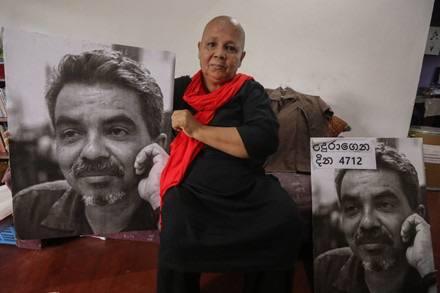
Prageeth Ekneligoda went missing in January 2010. His disappearance has been one of the most closely followed cases involving a journalist in Sri Lanka, and press freedom groups and his family have campaigned for answers over the years.
The case is being heard by a bench of three High Court judges, and the State is represented by the Deputy Solicitor General, a senior law officer of the Attorney General’s Department.
Enforced disappearance means a person is taken by or with the involvement of state agents or others and their fate is then concealed. The charges in this trial concern abduction and enforced disappearance, and the court has yet to deliver any verdict. Evidence given by a witness is tested by both sides and has not been judged as fact by the court.
What it means
The testimony is part of the evidence the bench will weigh when it decides the case. Statements about what Ekneligoda said, and in what context, may be examined further by the prosecution and the defence as the trial continues.
For readers, the trial is a test of how the justice system handles long-delayed cases of alleged abduction and disappearance.