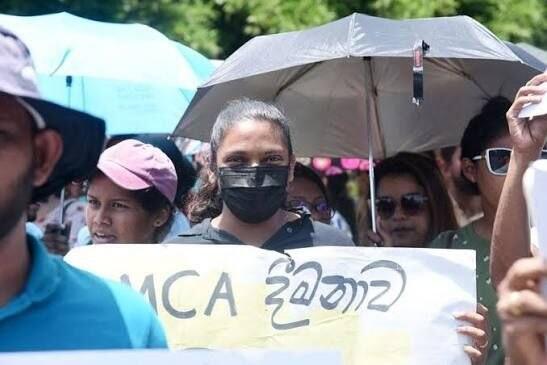
University trade unions have warned of “stern trade union action” if the government’s third Budget does not address the grievances of state university staff.
Ranga Meegoda, President of the Inter-University Trade Union Federation, told a media briefing in Kandy on Tuesday that the government had ignored severe shortages of academic and non-academic staff while increasing student intakes.
Meegoda said unions had met Prime Minister and Education Minister Harini Amarasuriya and Minister Dr. Anil Jayantha. He said both had acknowledged the grievances but offered no solutions. He said promises made after earlier discussions had not been honoured.
“We are now looking to the third Budget of the incumbent government for relief,” Meegoda said, urging the President, the Prime Minister and the relevant ministers to meet the unions. He said that if the requests were rejected, unions would resort to action “irrespective of any laws or regulations introduced”.
Dhammika S. Priyantha, Co-Chairman of the Inter-University Trade Union Joint Committee, said state universities faced a staff shortage of about 25 percent and a severe shortage of physical resources. He said higher enrolments under these conditions would cause a major crisis in the university system.
The unions listed several unresolved demands: correcting salary-ratio anomalies among university employees in the public service, raising the monthly adjustment allowance to 75 percent, restoring a special allowance that was withdrawn, filling academic and non-academic vacancies, and improving pension benefits.
Meegoda said the first Budget had raised public servants’ salaries but removed a 29 percent allowance from university employees, leaving them worse off. Priyantha said staff were leaving state universities for jobs in Sri Lanka and overseas because of pay, and that private universities offered attractive salaries and enjoyed privileges.
Background
State universities in Sri Lanka are funded largely by the government. Their non-academic employees, including administrative, technical and clerical staff, are often represented by separate unions from lecturers, and both groups have taken industrial action over pay and allowances in the past.
Deputy Minister of Finance Anil Jayantha Fernando said on Wednesday that the upcoming 2027 Budget, the third of the National People’s Power (NPP) administration, should be judged on its broader economic direction rather than solely on welfare benefits or tax concessions. He said the first two budgets had tackled immediate challenges and established macroeconomic stability, and that the government was now shifting towards economic expansion.
What it means
If talks fail and unions carry out their threat, university students and their families could face disruption to lectures, examinations and administrative services such as registration and results. The unions have not said when any action would begin or what form it would take.
The unions say staff shortages and student intakes are linked. Whether the Budget addresses their allowances, vacancies and pensions will determine whether the dispute continues into the new year.