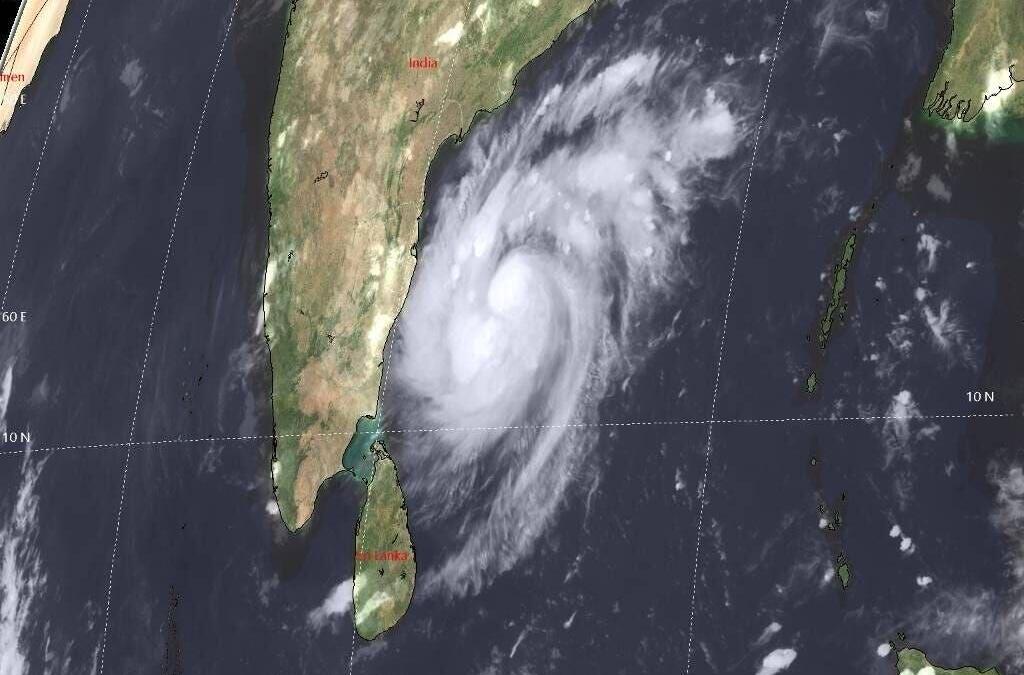
At least 21,356 people from 5,800 families have been affected by bad weather and Cyclonic Storm Arnab across Sri Lanka, the Disaster Management Centre (DMC) said, as a new system named Murasu gathers strength over the Bay of Bengal.
Six people have died, eight have been injured and three are missing in weather-related incidents between 23 October and 1 November, the DMC said. Eight houses have been destroyed and another 737 damaged.
The weather has hit 137 Divisional Secretariat Divisions in 19 districts. Ratnapura is the worst affected district, with 10,051 people from 2,666 families in 15 divisions. Puttalam follows, with 6,900 people from 1,850 families in 11 divisions.
The Department of Meteorology issued a red-level warning for strong winds and rough seas on Sunday after the deep depression over the south-east Bay of Bengal became Cyclone Murasu. The Natural Hazards Early Warning Centre issued the warning at 3 p.m., and it is valid for 24 hours.
At 11.30 a.m. on Sunday the cyclone was near latitude 12.1 degrees north and longitude 85.3 degrees east, moving west-northwest. The department said it was very likely to become a severe cyclonic storm over the west-central Bay of Bengal on Monday, then move north-west and cross the Andhra Pradesh coast of India between midnight on 2 November and the early hours of 3 November.
Winds in the affected sea areas could reach 70 to 80 kilometres an hour, with heavy thundershowers and very rough seas, the department said. Fishing and naval communities have been told not to go into deep-sea areas between 10 and 15 degrees north and 80 and 90 degrees east until further notice, and those already there have been asked to move to safer locations.
The warning also covers deep-sea areas from Mannar to Trincomalee via Kankesanthurai. Fishing and naval communities there have been asked to stay alert and follow forecasts and advisories.
Background
The Department of Meteorology, through its Natural Hazards Early Warning Centre, issues the weather and sea warnings that fishing crews and naval units rely on. The Disaster Management Centre compiles figures on deaths, injuries, damaged homes and affected families from reports sent in by district and divisional offices, so its totals can change as more reports arrive.
Low-pressure systems and cyclones over the Bay of Bengal are a regular feature of weather at this time of year, and even systems that pass well away from Sri Lanka can bring rough seas and strong winds to the island’s coastal waters.
What it means
For fishing families, the warning means boats should stay out of the named sea areas while it is in force, and crews already at sea have been asked to head for safer waters. Coastal communities from Mannar to Trincomalee are asked to follow the department’s updates, as the warning period and the affected areas may change as the cyclone moves.
People living in the districts already affected, including Ratnapura and Puttalam, can follow the DMC’s updates for the latest figures on damage and affected families.