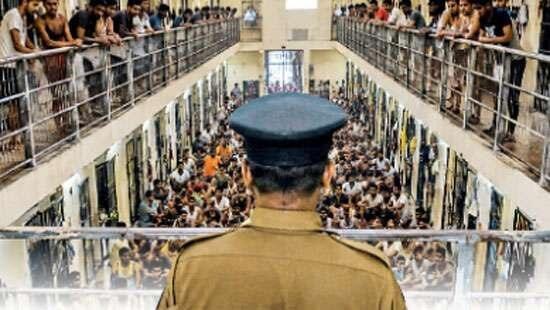
Sri Lanka’s prisons are operating at three to four times their intended capacity, with some inmates held in inhumane and degrading conditions, Bar Association of Sri Lanka (BASL) President Rajeev Amarasuriya said on Sunday.
He made the statement after visiting the New Magazine Prison in Welikada to take part in a legal aid camp. The BASL organised the camp with the Prison Monitoring Board (Whole Island).
Mr Amarasuriya said conditions were most worrying for people held on remand. “This is particularly troubling in the case of those held on remand, who have merely been suspected or accused of an offence and continue to enjoy the presumption of innocence,” he said.
He said prison might offer some security to repeat offenders and to people who struggle to obtain basic necessities, but that conditions for many others were inhumane and degrading.
The BASL President called for urgent reforms to ease overcrowding, improve prison conditions and make sure detainees have access to legal assistance.
He welcomed efforts by the Ministry of Justice to deal with long-standing problems through legislation, including proposed amendments to the Poisons, Opium and Dangerous Drugs Ordinance and the House Confinement Bill. He said such measures could reduce unnecessary imprisonment and ease the overcrowding, but that legislation alone would not be enough.
“The forthcoming National Budget must also give greater priority to prison infrastructure, including the construction of additional prisons, improvements to existing facilities, better sanitation, healthcare and living conditions, and adequate provision for rehabilitation,” he said.
Background
The New Magazine Prison is in Welikada, Colombo. People held on remand are those who have been detained by order of a court while their cases are pending, and they have not been convicted of any offence.
Mr Amarasuriya said the BASL began its legal aid initiative after a request from the Prison Monitoring Board, and he hoped the programme could be expanded. He said legal assistance for people who cannot afford a lawyer matters most when personal liberty is at stake.
He also recognised the difficult working conditions of prison officers, noting that they spend much of their daily lives within the same prison walls as the inmates.
What it means
For families of people on remand, the BASL’s call for access to legal aid points to a service that is now available through the camps run with the Prison Monitoring Board. The association said it hopes to widen the programme beyond the first camp.
The reforms Mr Amarasuriya mentioned, which are the proposed amendments to the drugs ordinance and the House Confinement Bill, are aimed at reducing unnecessary imprisonment. He linked the pace of improvement in prison conditions to the allocation of funds in the forthcoming National Budget.
“Ultimately, while imprisonment may involve the deprivation of liberty, it must never amount to the deprivation of human dignity,” he said.