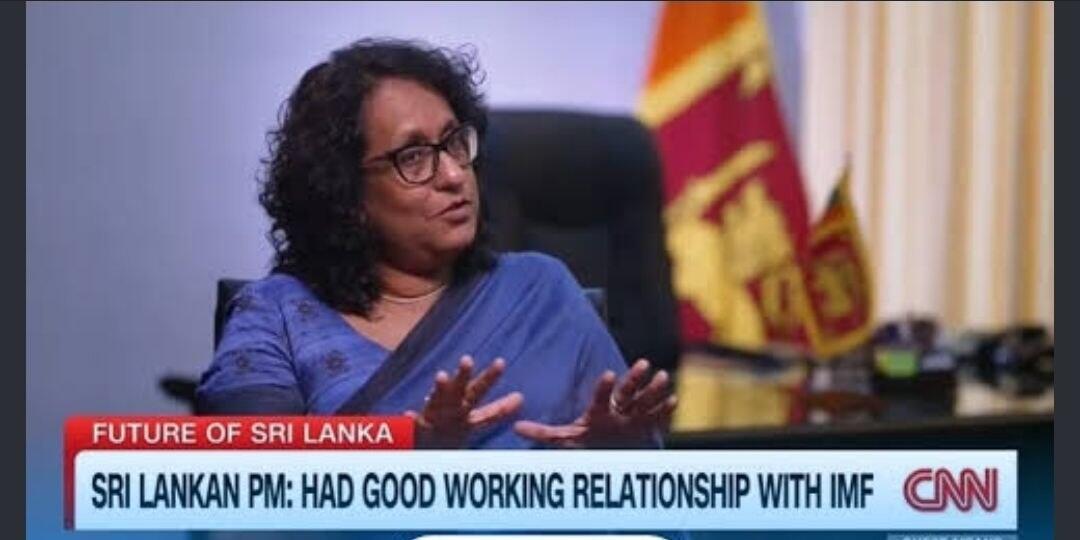
Former Sri Lanka Podujana Peramuna (SLPP) MP Gevindu Cumaratunga has asked the government to explain what Prime Minister Dr. Harini Amarasuriya meant by an “all-inclusive” new Constitution, after her interview with CNN’s Richard Quest.
Cumaratunga, a civil society activist, said the government owed the public an explanation of how it intended to address the root causes of the war that ended in May 2009. He made the remarks when The Island asked for his response to the Prime Minister’s comments.
In the interview, Prime Minister Amarasuriya pointed to serious flaws in the country’s supreme law and referred to the 22 amendments enacted over the years. She said that although the war had ended, a new Constitution was needed to deal with the root causes of the conflict, and that the country could not move forward unless those issues were addressed. She also stressed the importance of transparency and accountability in the process.
Cumaratunga said he too recognised the need for a new Constitution, but that the question was the direction of the proposed document and its objectives. He said successive governments had addressed the concerns of Tamil-speaking political parties before the final phase of the war, and that Tamil had been made an official language through the 13th Amendment in 1987. He said English was given constitutional recognition as the link language through the 16th Amendment in 1988.
He said the Prime Minister could not be unaware of what he described as the consequences of the 16th Amendment for the Sinhala community in the northern and eastern administrative districts. He also said the Year 5 Scholarship examination cut-off marks had quietly stopped being issued for the Jaffna, Kilinochchi, Mannar and Batticaloa districts several years ago.
Cumaratunga also said that more than 6.9 million people voted for Gotabaya Rajapaksa in the expectation that he would bring in a new Constitution reflecting the post-war situation. He recalled an assurance given by Vijitha Herath before the September 2024 presidential election that the country’s unitary status would not be harmed and that Buddhism would keep the foremost place under Article 9 of the Constitution.
Background
Article 9 of the Constitution, which sits in Chapter II, gives Buddhism the foremost place and makes it the duty of the State to protect and foster the Buddha Sasana. Proposals for a new Constitution have been raised by several governments in recent years, and Cumaratunga recalled two earlier attempts: the effort made during the 2015 to 2019 period and the one taken up under President Rajapaksa a few years later. Neither produced a new Constitution.
The same CNN interview also covered the war in West Asia involving the United States, Israel and Iran, and its effect on Sri Lanka. The Prime Minister was also asked about the National People’s Power (NPP) government working with the International Monetary Fund (IMF) after criticising it in the past. Dr. Amarasuriya said the government had no other option but to remain committed to the agreement Sri Lanka entered into with the IMF in 2023.
What it means
A new Constitution would shape matters that touch daily life, including language rights, the powers of provincial administrations and the relationship between the State and religion. The Prime Minister’s comments to CNN, as reported, set out principles rather than specific provisions.
For Sri Lankans at home and abroad, the debate indicates that any proposal is likely to be contested on questions of devolution, language and the place of Buddhism, which Cumaratunga raised in his response.