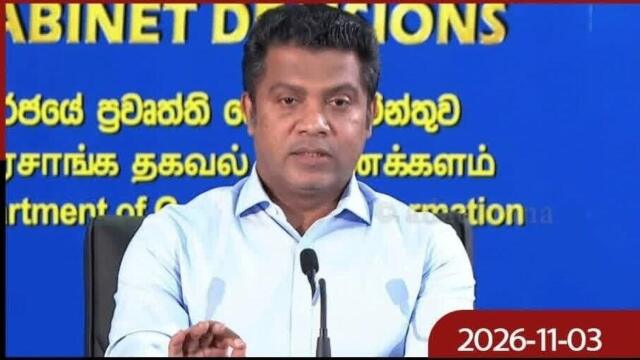
Former Foreign Affairs Minister and Joint Opposition Convener Prof. G.L. Peiris has warned that two proposed laws could put Sri Lanka’s GSP+ trade concession at risk.
Speaking at a press conference in Colombo, Prof. Peiris named the Organised Crime Bill and the Protection of the State from Terrorism Bill. He said the two pieces of legislation are closely linked and could seriously damage Sri Lanka’s international reputation, trade relations and investment prospects.
He said Amnesty International, Human Rights Watch and the United Nations Human Rights Council in Geneva have already raised serious concerns over the Bills. According to Prof. Peiris, they have advised the Government against passing them without fundamental amendments.
“The issue is not merely that these Bills could lead to widespread human rights violations. They also directly contradict the international commitments Sri Lanka has undertaken,” he said.
Prof. Peiris said the GSP+ concession is particularly important to Sri Lanka’s export industries and services, and that its continuation could come under threat if the Bills are enacted in their present form. He described the Human Rights Council’s criticism as especially significant because of the link between human rights commitments and the concession.
He urged the Government to reconsider the proposed laws carefully, taking into account their possible effect on democratic freedoms, international relations and the economy. The two Bills should not be considered separately, he said, because their combined effect could undermine the fundamental rights and freedoms of the people.
Background
GSP+ is a trade arrangement of the European Union under which eligible developing countries can export many products to the EU at reduced or zero tariffs. In return, beneficiary countries commit to ratify and effectively implement a set of international conventions on human rights, labour rights, environmental protection and good governance.
Sri Lanka lost the concession in 2010 and regained it in 2017. The EU reviews how beneficiary countries are meeting their obligations, and its reports on Sri Lanka have in the past drawn attention to the Prevention of Terrorism Act, which successive governments have been urged to replace.
The Protection of the State from Terrorism Bill is the proposed successor to that Act, while the Organised Crime Bill deals with offences linked to organised criminal groups. Both are still proposals and have not become law.
What it means
The Bills are not yet law, so no change to the concession has been announced. Prof. Peiris’s statement is a warning from the opposition, and the outcome would depend on how Parliament finalises the legislation and how the EU assesses it.
If preferential access to the EU market were ever withdrawn, exporters would face higher tariffs on goods sold there. Apparel is among Sri Lanka’s main exports to the EU, so factory owners and the workers they employ would be among those most exposed.