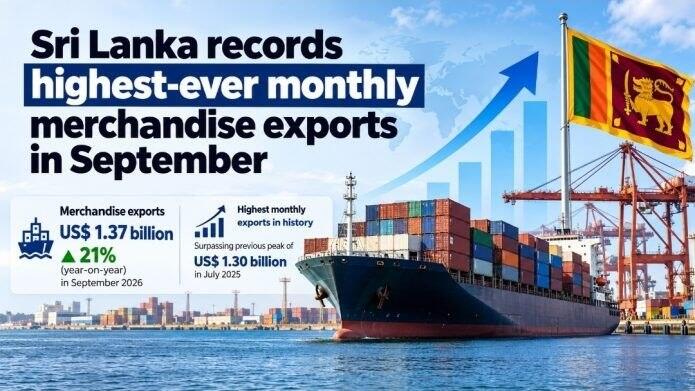
Sri Lanka earned a record US$ 1.37 billion from merchandise exports in September 2026, the highest monthly figure on record, according to the Central Bank of Sri Lanka (CBSL).
In its latest External Sector Performance report, the Central Bank said merchandise exports rose 21 percent from September 2025. The previous record was US$ 1.30 billion, set in July 2025.
Total merchandise export earnings for the first nine months of 2026 reached US$ 10.75 billion, 5.3 percent more than in the same period last year.
Services exports rose 11.2 percent to US$ 559 million in September. Over January to September, however, services export earnings fell 0.6 percent to US$ 5.26 billion. Goods and services combined brought in US$ 1.94 billion in September, up 18 percent from a year earlier.
The Central Bank said the merchandise trade deficit widened to US$ 7.9 billion in the first nine months of 2026, from US$ 5.2 billion in the same period of 2025. It attributed this to a faster rise in import spending, which grew 21.3 percent to US$ 18.67 billion between January and September.
The monthly deficit moved the other way. It narrowed to US$ 731 million in September, from US$ 910 million a year earlier.
Background
The Central Bank publishes its External Sector Performance report every month. It sets out earnings from merchandise and services exports, import spending, the trade balance and other flows that make up the country’s dealings with the rest of the world.
Merchandise exports cover goods such as apparel, tea, rubber products, coconut products and spices. Services exports include earnings from areas such as information technology, transport and travel.
The trade deficit is the gap between what a country spends on imports and what it earns from exports. Sri Lanka has run a merchandise trade deficit for many years, and the gap is usually bridged by other inflows, such as remittances from Sri Lankans working abroad, tourism earnings and financing from other sources.
The September report shows two trends at once. Export earnings are rising, and import spending is rising faster, which is why the cumulative gap has grown even in a record month for exports.
What it means
Export earnings are a main source of the foreign currency the country needs to pay for imports of fuel, medicines, food and raw materials. Higher earnings generally help the country finance those purchases.
Export industries also provide jobs for many households, particularly in garment factories and in plantation and agricultural work, so changes in export earnings can affect incomes in those areas.
A wider trade deficit means more foreign currency is leaving the country for imports. The Central Bank’s figures show that import spending was the main reason the nine-month gap grew, while the narrower deficit in September shows the monthly position improved from a year earlier.