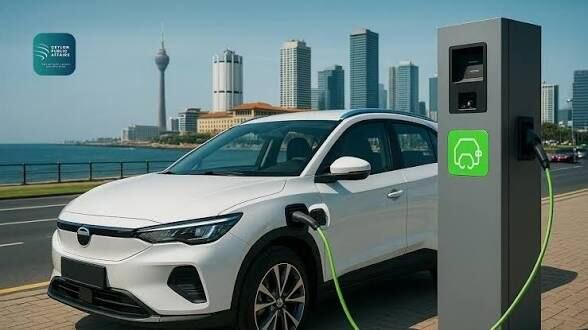
The National Audit Office has found weak regulation and no system for handling used batteries in Sri Lanka’s electric vehicle (EV) sector, according to an environmental performance audit.
The audit, conducted under Auditor General L.S.I. Jayaratna, covered the regulatory framework, infrastructure and environmental management of electric vehicles from 2020 to 2025. It found that registered EVs had passed 100,000 by mid-2026.
Electric motorcycles made up nearly 84 percent of all EV registrations by late 2025. The audit said several government initiatives had run into administrative delays and implementation problems.
The Global Environment Facility (GEF)-funded e-mobility project faced prolonged administrative bottlenecks and changes in ministerial oversight, the report said. A Cabinet-approved plan to buy 200 electric buses for the Sri Lanka Transport Board (SLTB) was also terminated after the only bidder was disqualified over a fraudulent performance bond. No recovery action had been taken as of late 2025, according to the report.
Used EV batteries are classified as scheduled hazardous waste, the audit said, but Sri Lanka has no central system to track them through their life cycle and no domestic recycling facility able to handle the growing volume. The batteries may therefore be stored informally or exported for treatment and recycling at considerable cost.
The audit recommended that the Central Environmental Authority (CEA) and the Ministry of Environment speed up technical guidelines and set up a national system to track EV batteries from market entry to final disposal. It also called for Extended Producer Responsibility (EPR) rules, under which manufacturers and importers share responsibility for collecting and managing used batteries.
On charging, the report recommended that the Public Utilities Commission of Sri Lanka (PUCSL) keep a central register of charge point operators, introduce a transparent tariff framework and carry out regular safety inspections at public charging stations.
Background
Sri Lanka’s EV market has grown quickly in recent years, and the audit found that most of the growth came from two-wheelers. The report said it lacked a unified measurement, reporting and verification framework to quantify emission cuts from electric mobility for reporting under the Paris Agreement.
The audit also questioned how much carbon is actually saved. It cited a national grid emission factor of about 0.83 kilograms of carbon dioxide per kilowatt-hour, and said the carbon intensity of electricity generation could limit the reduction in greenhouse gas emissions from EV use.
What it means
For the owners of the more than 100,000 registered EVs, the findings point to a gap that will matter as batteries age: the audit said there is currently no domestic facility able to recycle them and no tracking system for them.
The report also recommended targeted promotion and financial incentives for electric two-wheelers and three-wheelers, which it identified as the segments with the most potential for cost-effective emission cuts. It further called for solar-powered or solar-assisted charging at vehicle depots to reduce reliance on carbon-intensive grid electricity.