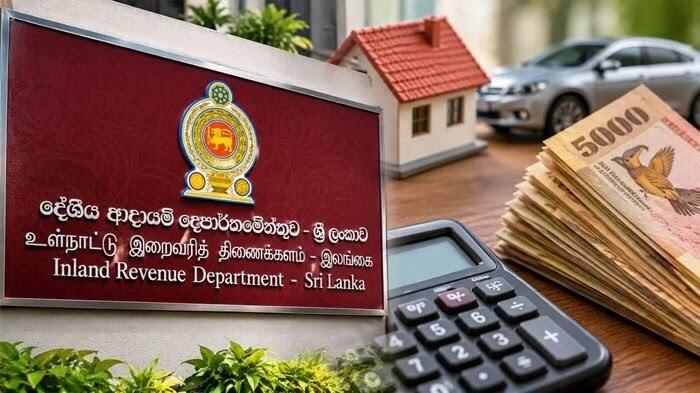
The Inland Revenue Department (IRD) has warned that cash payments above Rs. 500,000, including purchases of land, property and vehicles, can lead to higher tax bills under existing tax rules.
A senior IRD official said a business expense above Rs. 500,000 that is settled in cash, outside the permitted payment system, will not be accepted as a deductible expense when taxable income is calculated.
The official gave an example. If a business pays Rs. 1 million in cash for an expense, the whole amount is disallowed as a deduction. That raises its taxable profit by Rs. 1 million.
For a business taxed at the standard corporate income tax rate of 30 percent, the extra liability would be Rs. 300,000, the official said.
The official said similar restrictions apply to property transactions, especially when the taxable gain on the sale of land is worked out.
In a second example, an individual buys land for Rs. 9 million and later sells it for Rs. 10 million. The taxable gain would normally be Rs. 1 million, subject to the applicable tax rules.
If the original purchase was made in cash in breach of the prescribed payment requirements, the Rs. 9 million cost may not be recognised for tax purposes. The gain could then be calculated on the full Rs. 10 million sale price instead of the actual Rs. 1 million profit, the official explained.
The IRD official said the restrictions are meant to encourage transactions through formal financial channels, improve transparency and bring activity outside the established tax system into the regulatory framework.
Background
Income tax is charged on taxable profit, which is broadly a business’s income minus the expenses that the law allows it to deduct. When an expense is disallowed, the profit on which tax is calculated goes up by the same amount, even though the money was genuinely spent.
A similar principle applies to property. A seller’s gain is normally worked out by subtracting the acquisition cost from the sale price, so a cost that is not recognised makes the gain, and the tax on it, larger.
The IRD official’s examples use the Rs. 500,000 threshold and the 30 percent corporate rate. Individual circumstances and the exact tax treatment depend on the applicable rules.
What it means
For businesses, paying large supplier bills in cash can leave the expense unrecognised for tax purposes and increase the tax due, as in the IRD’s Rs. 300,000 example on a Rs. 1 million cash payment.
For people buying and selling land, property or vehicles, the way the original purchase was paid for can affect how much tax is due when the asset is later sold. The IRD’s guidance points towards payments made through formal financial channels, and taxpayers can check the detail of the payment rules with the department.