
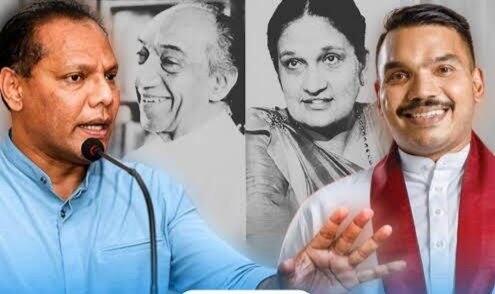
Opposition MP Dayasiri Jayasekara told Parliament that the government should not use criminal cases to remove political opponents from elections, citing what he called the treatment of Sirimavo Bandaranaike in 1980.
“Have the courage to face your opponents at the polls. Leave the choice to the people,” Jayasekara said. He argued that a government that uses the criminal justice system to disqualify opponents shows it lacks confidence in facing voters at the next election.
He raised concerns over Section 149 of the Anti-Corruption Act. The provision allows a magistrate to remand a suspect on the strength of a certificate issued by the Director-General of the Commission to Investigate Allegations of Bribery or Corruption, subject to the conditions set out in the law.
Referring to the proceedings involving Opposition MP Namal Rajapaksa, Jayasekara questioned whether magistrates have enough authority to examine the factual grounds behind such certificates before ordering detention. He said guilt or innocence was a matter for the courts, but every citizen should have a meaningful chance to challenge the grounds for detention.
“If you use the criminal law to put an opponent out of the electoral contest, you are doing to that opponent what J. R. did to Sirimavo,” he said.
The MP also questioned the decision to raise the retirement age of sitting Supreme Court judges from 65 to 67 and Court of Appeal judges from 63 to 65 under the Twenty-Second Amendment. He said the change could have applied only to future appointments rather than extending the terms of judges already serving.
Jayasekara called for more transparency in how benches are chosen for politically sensitive cases, including those involving senior politicians and proposed national security legislation. He proposed that the principles governing bench assignments, and the names of judges selected for important cases, be published.
Background
Namal Rajapaksa is in remand custody in connection with the ‘Krrish’ transaction, which is being investigated by the Bribery Commission. On 20 November, Colombo Chief Magistrate Asanga S. Bodaragama ordered the Commission to submit a progress report on the investigation on 1 December. The Magistrate also ordered that Rajapaksa be produced before court on that date if he remains in remand. Another suspect in the case, Janaki Siriwardena, was further remanded until 1 December.
In a separate corruption case, the same Magistrate on 20 November ordered that MP Chamara Sampath Dassanayake and his Private Secretary, Sumathipala Liyanarachchi, be further remanded until 27 November.
Jayasekara recalled that the government of President J. R. Jayewardene stripped former Prime Minister Sirimavo Bandaranaike of her civic rights in 1980, which prevented her from contesting the 1982 presidential election. She returned to power as Prime Minister in 1994, he told the House.
What it means
The exchange centres on how far courts can test the evidence behind a remand request in corruption cases, a question that applies to any suspect and not only to politicians. Jayasekara said the same legal safeguards should apply to opposition politicians, government supporters, trade union leaders and ordinary citizens.
The next steps are the court dates in the two cases: 27 November in the Chamara Sampath Dassanayake matter and 1 December in the ‘Krrish’ case.


