Sri Lanka’s major state-owned enterprises (SOEs) made a combined profit of Rs. 259.3 billion in the first six months of 2026, up from Rs. 227.8 billion a year earlier, according to the Finance Ministry.
The increase of Rs. 31.5 billion is about 13.8 percent. The figures are in the ministry’s Mid-Year Fiscal Position Report 2026, released on 31 October. The ministry said the result came despite losses at several institutions and economic pressure from the conflict in the Middle East.
State banks and financial institutions were among the largest contributors. The Bank of Ceylon reported a profit before tax of Rs. 62.7 billion, People’s Bank Rs. 32.6 billion and the National Savings Bank Rs. 22.6 billion. The Employees’ Trust Fund Board made Rs. 36.5 billion and the National Insurance Trust Fund Rs. 12.8 billion.
Among other enterprises, the Sri Lanka Ports Authority reported Rs. 34.5 billion and the Ceylon Petroleum Corporation (CPC) Rs. 29.2 billion. Airport and Aviation Services (Sri Lanka) Limited recorded Rs. 24.9 billion and the National Water Supply and Drainage Board Rs. 16.2 billion.
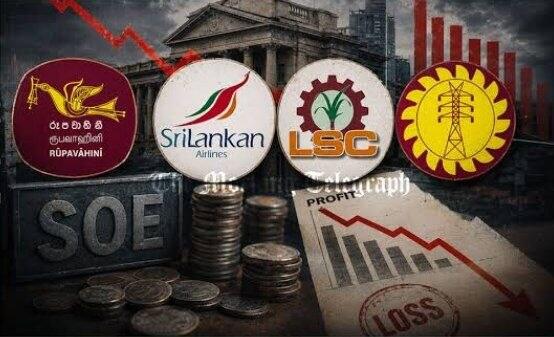
Several enterprises kept making losses. SriLankan Airlines reported a loss before tax of Rs. 35.6 billion for April to June 2026, against Rs. 8.9 billion in the same three months of 2025. Lanka Sugar Company lost Rs. 1.53 billion and the Sri Lanka Transport Board Rs. 471 million in the first half of the year.
The report also listed the State Printing Corporation, the Sri Lanka Rupavahini Corporation, the Sri Lanka Broadcasting Corporation, Independent Television Network and Lanka Sathosa among the loss-making institutions.
Background
The Treasury gave the CPC Rs. 41 billion and National System Operator (Private) Limited Rs. 15 billion in subsidies during April to June 2026, the ministry said. The payments were meant to ease the effect of the Middle East conflict on consumers and the economy.
The Government set up a dedicated SOE restructuring unit in March 2026. The unit is now handling the liquidation of 33 selected state-owned enterprises, the report said.
Revenue the Treasury collected from state enterprises through levies and dividends rose to Rs. 12.6 billion in the first half of 2026, from Rs. 11.7 billion in the same period last year. The ministry said enterprises faced higher input costs, supply chain disruptions and order cancellations in the second quarter, but that overall performance remained positive.
State enterprises have long been a point of debate in Sri Lanka’s public finances, because losses at some of them have in the past had to be covered by the Treasury. Reform of loss-making enterprises is also a part of the economic reform agenda the Government has discussed with the International Monetary Fund (IMF).
What it means
For taxpayers, the figures show where public money earns a return and where it is lost. When a state enterprise runs at a loss, the shortfall can fall on the Treasury, which is funded by taxes and borrowing.
The fuel and electricity subsidies named in the report relate to the costs households and businesses pay. Readers who use state services such as buses, state-run shops or the national airline are affected by how these institutions are restructured or kept running.