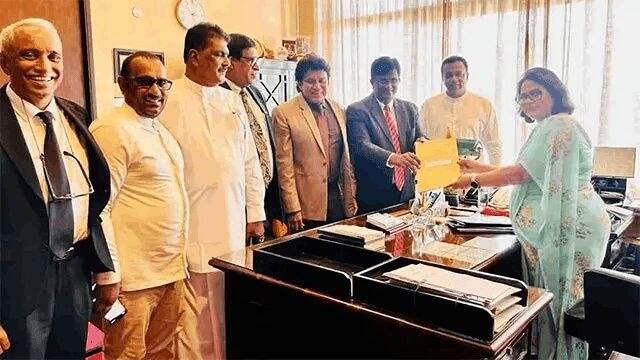
Parliament has scheduled a debate on a revised no-confidence motion against Speaker Dr Jagath Wickramaratne for Tuesday, 3 November, according to a statement issued by Parliament.
The Opposition is to submit the revised motion. The debate was placed on the agenda for the first week of November at a meeting of the Committee on Parliamentary Business held on 23 October and chaired by the Speaker. Parliament is due to sit from 3 to 6 November.
The rest of the week is already planned. On Wednesday, 4 November, MPs will debate regulations published in Extraordinary Gazette No. 2508/27 under the Imports and Exports (Control) Act, together with a Supplementary Estimate. A government-sponsored adjournment motion follows on Wednesday and another on Thursday. Friday, 6 November, is set aside for Private Members’ Motions.
Separately, the Samagi Jana Balawegaya (SJB) and its allies issued a special statement urging the Speaker to resign or allow the debate to go ahead. They accused the Government of undermining democratic principles and said its decision to reject the proposed debate threatened the Opposition’s parliamentary rights.
According to the statement, the Committee on Parliamentary Business, chaired by the Speaker, had rejected the motion, which concerns allegations of personal misconduct. The Opposition also rejected the Government’s argument that the matters raised were sub judice, saying legal experts had described that claim as unfounded.
The Opposition said it would not withdraw or amend the allegations in line with the Government’s demands and remained determined to pursue the motion.
Background
The Opposition said the motion was handed to Parliament on 9 October and entered in the Order Book on 12 October. At a meeting of the Committee on Parliamentary Business that day, held while the Speaker was overseas, it was proposed that the Attorney General be consulted on whether the allegations could conflict with ongoing legal proceedings. The Opposition said the motion was never referred to the Attorney General.
At a party leaders’ meeting on 23 October, chaired by the Speaker, the Government and the Speaker maintained that the Attorney General’s opinion was not needed and that the Opposition should amend and resubmit the allegations before any further step, the statement said.
The allegations are based on a parliamentary report titled Report of the Inquiry into the Leak of Confidential Information Regarding the Speaker, which was prepared after a letter from the Speaker’s Private Secretary, the Opposition said. It also argued that it was unethical for the Speaker to remain in office while the Commission to Investigate Allegations of Bribery or Corruption conducts an investigation against him, and asked him to step down at least until that investigation ends. The statement gave no response from the Speaker to these points.
What it means
A no-confidence motion against the Speaker tests whether the Opposition can bring a matter to a vote in the House, and the 3 November sitting will show whether the revised motion is taken up. The debate date is fixed, but the Opposition’s statement shows the two sides still disagree over the form the motion should take.
For the public, the dispute affects how Parliament conducts its business in a week that also includes debate on import and export regulations and a Supplementary Estimate, which deals with additional government spending.