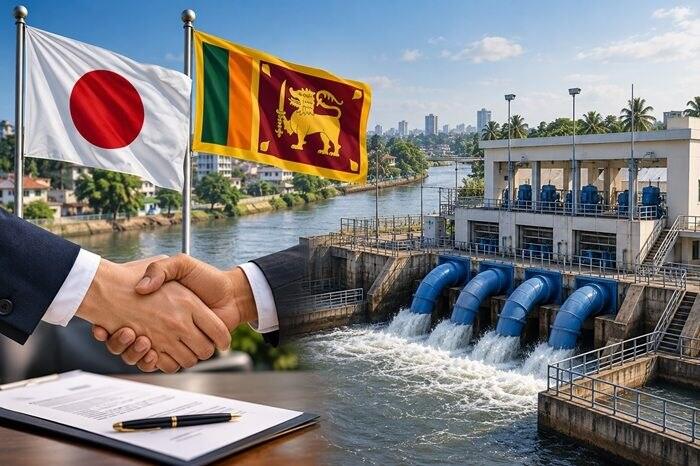
Japan has pledged more than Rs. 600 million for a five-year project to monitor water quality in the Kelani River basin, with the first testing equipment handed over on Monday.
Japanese representatives gave the equipment to Environment Minister Dr. Dammika Patabendi at a meeting of the project’s steering committee at the Central Environmental Authority (CEA) auditorium. It was then distributed among the CEA, the University of Moratuwa and General Sir John Kotelawala Defence University for use in the project.
The project is run through the Japan International Cooperation Agency (JICA) and the Japan Science and Technology Agency (JST) under the SATREPS programme. It aims to build a data platform for monitoring the aquatic environment of the basin from 2026 to 2030.
It will also set up a basin-wide monitoring network and focus on developing policy frameworks, training personnel, engaging technical experts and publishing research findings. The Aquatic Environment Data Operations Centre at the University of Moratuwa will play a key role.
The steering committee works under Environment Ministry Secretary K.R. Uduwawala. Professor So Kasama of Tohoku University in Japan is the principal investigator. The Department of Irrigation, the Water Resources Board and the Clean Sri Lanka Secretariat are also involved.
Background
The Kelani River stretches about 145 kilometres and its basin covers around 2,300 square kilometres. Roughly a quarter of Sri Lanka’s population lives within the basin. The river is a major source of drinking water for Colombo and surrounding areas.
The basin has 14 major water treatment and distribution facilities and more than 5,400 industries, including those in the Biyagama and Seethawaka industrial zones that operate with CEA authorisation.
The river faces pollution from industrial wastewater, untreated sewage, agricultural waste, and sand and gem mining. Floods and droughts also affect water quality. Sri Lanka also has no specific groundwater quality standards, a concern because groundwater is a major source of drinking water for many households in the Western Province.
What it means
The project is expected to give government agencies a scientific base for managing water quality in the basin. Its stated goal is safer drinking water for the public by 2030.
For residents of Colombo, Gampaha and other areas that draw drinking water from the river, the monitoring network is meant to produce regular data on the state of the water. Any change in water quality rules would depend on policy decisions taken by the government after the project’s findings are published.